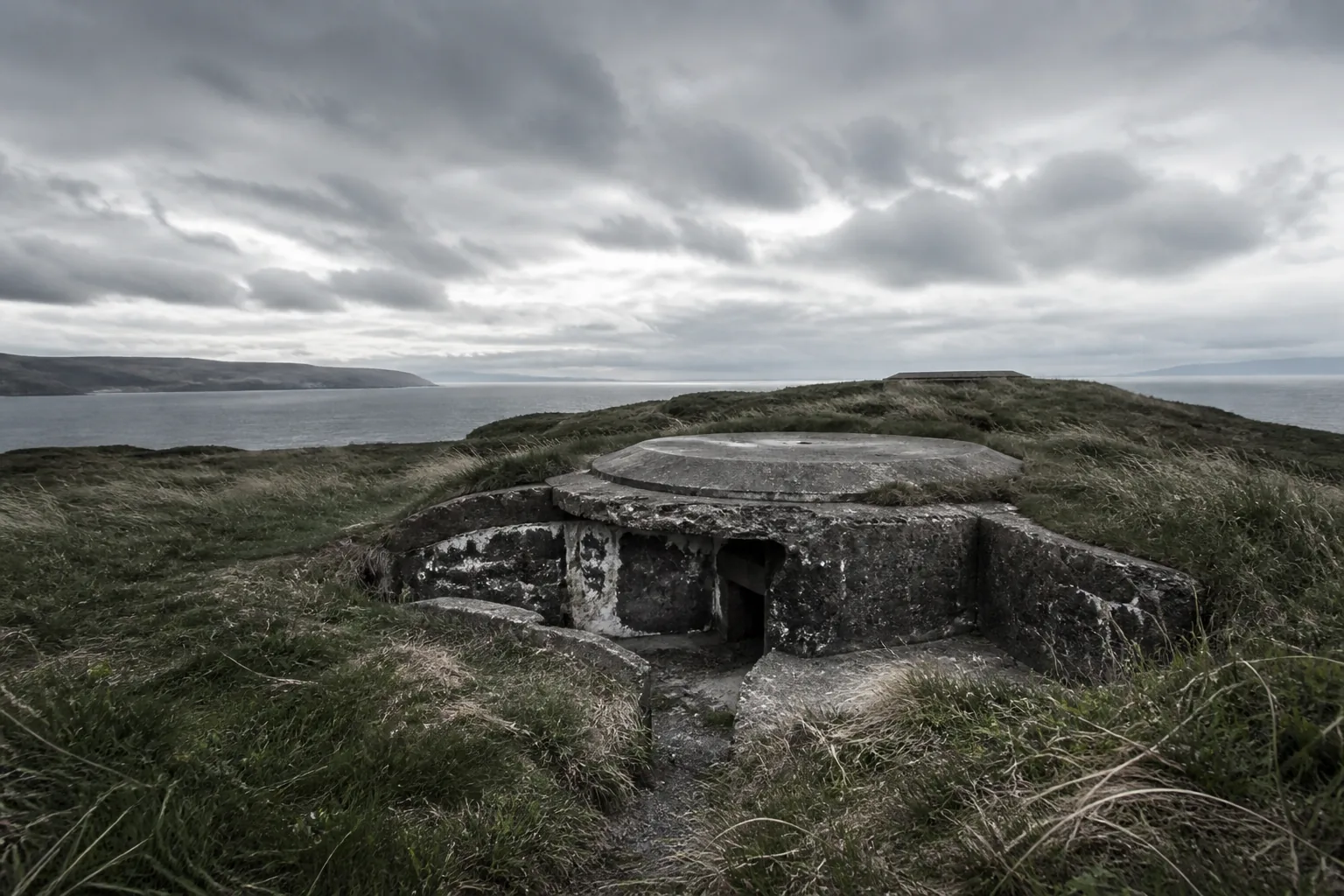
Battles
Famous Battles: Gettysburg, Normandy, Midway, Fallujah and More
A battle is the visible end of a process that started days or months earlier. These accounts spend their length on the part that decided the outcome rather than on the part that is easiest to narrate.
The popular account of a battle tends to concentrate on its most dramatic hour. The useful account concentrates on the preceding week. Who selected the ground, and did the other side have a choice about fighting there? What did each commander believe about the other's strength, and how wrong was it? Could ammunition, water and replacements reach the line at the rate the fighting consumed them? By the time the shooting starts, those questions have mostly been answered.
Two examples on this site make the point in opposite directions. At Malta in 1565 a small outwork held for a month and cost the besieging force the campaign: the decisive factor was the calendar, not the assault. Off Beirut in 1983 a force configured for presence instead of combat was attacked by a method its physical security had not been designed against, and the failure was in posture instead of in fighting.
Reading a battle account critically
Three habits help. First, ask what the sources could actually see: a unit diary, a national history and a memoir are three different kinds of evidence. Second, be suspicious of clean turning points; most battles are decided cumulatively and the turning point is identified afterwards. Third, check whether the account explains the loser's decisions as reasonable given what they knew, because an account in which one side is simply foolish is usually incomplete.
Engagements
Six entries- 01 Gettysburg: Three Days in Which the Ground Decided Almost Everything Two armies met by accident at a road junction, and the side that arrived second took the high ground first. Most of what followed was a consequence of that.
- 02 Midway: Intelligence, Timing and Four Carriers A carrier battle in which neither fleet saw the other. What decided it was knowing where the enemy would be, and being in the air when they were rearming.
- 03 The Battle of the Bulge: A Winter Offensive Into a Thin Sector An attack through terrain judged unsuitable for armour, in weather that grounded aircraft, against the thinnest part of the line. It worked for about a week.
- 04 Normandy: The Landing, the Bocage and the Breakout The assault is remembered and the campaign that followed is not. Getting ashore took a day; getting out of the hedgerow country took most of two months.
- 05 Iwo Jima: Why the Island Was Worth Taking Eight square miles of volcanic ash, a defence built downward instead of at the waterline, and a garrison that fought without expecting relief.
- 06 Fallujah: Two Battles, and What Urban Fighting Costs An assault halted for political reasons and a second conducted seven months later. Together they are the reference case for modern combat in a city.
Sieges
Siege warfare follows different rules from open battle. The attacker's problem is time and supply and not manoeuvre, the defender's problem is stores and morale, and the outcome usually turns on which runs out first. Because the arithmetic is so explicit, sieges are among the most instructive engagements to study.
The parts of a battle that get recorded last
Accounts of engagements are shaped by what was easy to record. Movements and outcomes are written down promptly because they have to be reported upward. Casualty figures follow later and get revised. What people could actually see, hear and coordinate at the time is captured hardly at all, and it is usually the decisive variable.
This produces a characteristic distortion. Because the map is legible and the confusion is not, battles come to be described as manoeuvre problems (arrows, flanks, timing) when the units involved frequently did not know where they were relative to each other. The commander's intent appears in the record; whether it arrived intact at the company that had to execute it usually does not. An engagement in which orders reached everyone on time is rare enough to be worth remarking on.
Two further things are systematically under-recorded. Logistics: ammunition expenditure, water, casualty evacuation, and how far the nearest resupply was, which together set how long a force could keep fighting at all. And the state the troops arrived in — how far they had marched, whether they had slept, whether they had been in contact for days already. Both are recoverable from quartermaster records and unit diaries far more often than they are used, and both explain more outcomes than the tactical diagram does.
Where an account can be checked against a quartermaster return or a casualty ledger, that check is worth more than a second narrative history, because the two narratives usually share a source. The unglamorous records are the ones that have not been rewritten to fit the outcome.
Questions and answers
What usually decides a battle?
Ground, information and logistics, in roughly that order. Whoever occupies the terrain that matters, knows more about the other side, and can keep feeding ammunition and replacements into the fight tends to win it. Numbers matter, but numbers that cannot be supplied or that arrive piecemeal frequently do not.
Why is urban combat so costly?
Because it removes almost every advantage a better-equipped force has. Fields of view collapse to a few dozen metres, armour loses its standoff and can be attacked from above and behind, air support becomes hard to use with civilians present, and progress is measured building by building. It is also the environment in which a defender needs the least equipment to be effective.
Do casualty figures for famous battles change?
Frequently. Contemporary returns are compiled under pressure and are usually revised; the other side’s figures are compiled for a different audience; and definitions differ over who counts as wounded or missing. Accounts here give the range and its source instead of asserting one number.