NATO
NATO: How the Alliance Is Structured and What Article 5 Actually Says
NATO is easier to argue about than to describe. Its decisions are taken by consensus, its operational command is held by an American officer, and its most-quoted clause commits members to less automatic action than most summaries suggest.
The alliance has two halves that are frequently conflated. The political half is the North Atlantic Council, where every member has a seat and every decision requires consensus. There is no majority vote, which means a single member can prevent a decision and that most NATO announcements are the product of extended negotiation, not of a command.
The military half is a permanent integrated command structure: the thing that distinguishes NATO from most alliances in history. Allied Command Operations, under Supreme Allied Commander Europe, runs operations. Allied Command Transformation handles doctrine, training and future capability. Both exist continuously in peacetime, which is why the alliance can act quickly once a political decision is taken: the headquarters, the procedures and the communications already exist and have been exercised.
What Article 5 says
The treaty commits each member to treat an armed attack against one as an attack against all, and to take "such action as it deems necessary, including the use of armed force". The final clause is the operative one. Each government decides its own response; nothing is automatic.
That is not a loophole so much as the price of getting sovereign states to sign at all, and in practice the political weight of the commitment has been sufficient. It has been invoked exactly once, following the attacks of 11 September 2001, and the resulting contributions to operations in Afghanistan came from national decisions, as the wording anticipates.
Structure
Six elements- 01 The North Atlantic Council The political decision-making body. Every decision is taken by consensus.
- 02 The Military Committee Chiefs of defence, advising the Council and directing the strategic commands.
- 03 Allied Command Operations Runs operations, headquartered in Belgium and commanded by SACEUR.
- 04 Allied Command Transformation Doctrine, training and future capability, headquartered in Virginia.
- 05 Article 5 The collective-defence clause, and what it does and does not commit members to.
- 06 Enhanced Forward Presence Multinational battlegroups on the eastern flank and how they are led.
Multinational by design, and why that matters
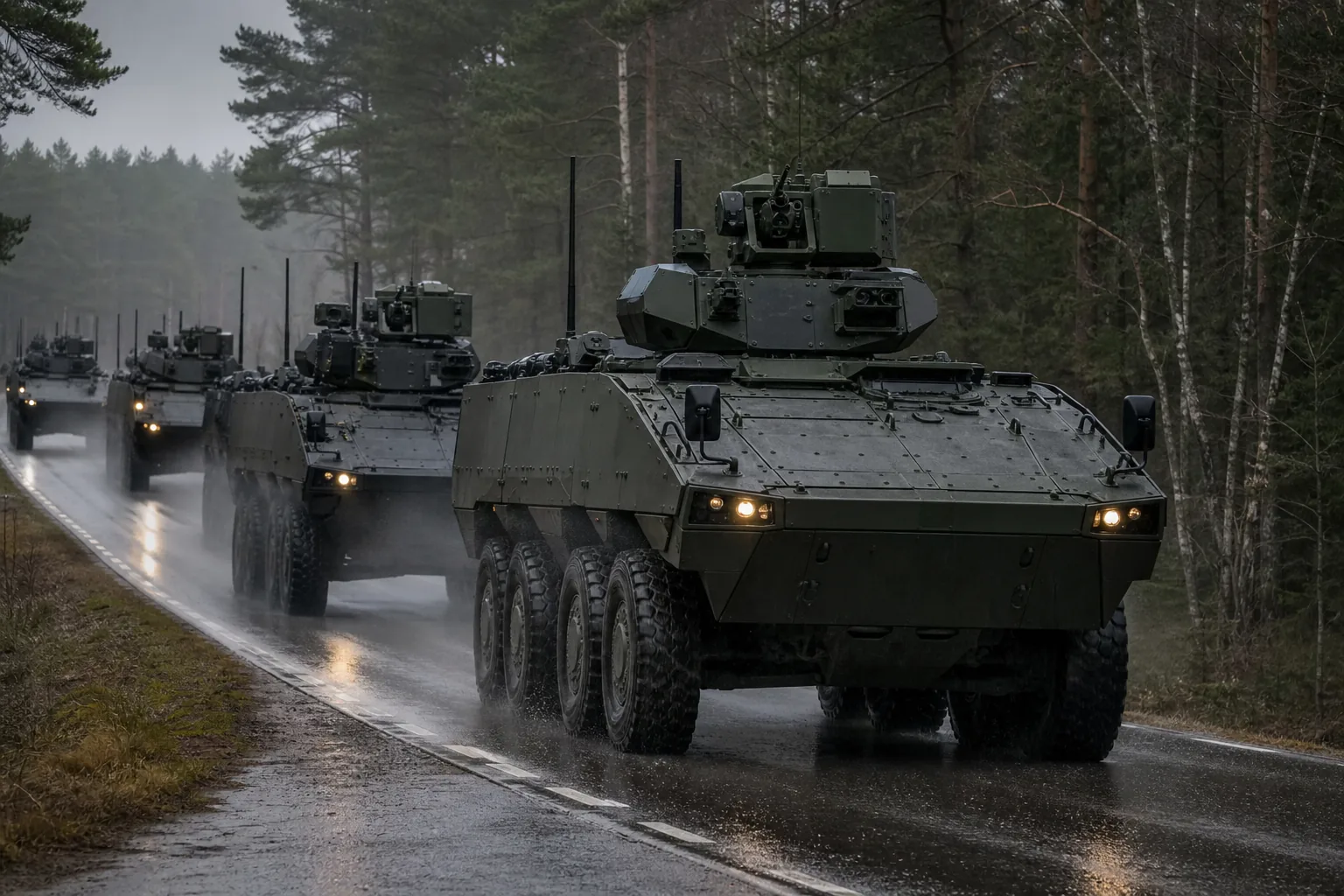
The battlegroups deployed on the eastern flank are deliberately multinational rather than national. Each has a framework nation providing the headquarters, communications and usually the largest contingent, with other allies contributing companies or supporting units into that structure.
The political logic is that an attack on any battlegroup involves several members at once, which makes the collective-defence commitment concrete instead of theoretical. The military cost is interoperability: units arrive with different vehicles, different radios, different ammunition and different procedures, and making them work as one formation is continuous staff effort rather than a solved problem.
For a rotating American unit this means the deployment is as much about integration as about readiness — learning the framework nation's procedures, establishing communications, and exercising with allies whose equipment differs from anything the unit trains with at home.
Two structural facts explain most coverage of the alliance. Command is permanent while forces are not: the headquarters and the planning machinery exist continuously, and the units filling them are assigned by member states for specific periods. And the alliance's military decisions are taken by consensus of the member governments and not by the command structure itself, so a story about what the alliance will do is usually a story about what its members have agreed to, which is a slower and more visible process than a command decision.
Force generation is therefore the number worth watching, not the headline commitment.
Alliance decisions are announced as unanimous because they cannot be announced any other way, which means the interesting part of any communiqué is what it declines to say. Wording that looks vague is often the record of an argument that was settled by leaving it vague.
Questions and answers
Does Article 5 commit members to go to war automatically?
No. It commits each member to regard an attack on one as an attack on all and to take "such action as it deems necessary", which each government determines for itself. The commitment is real and politically heavy, but the response is decided nationally rather than triggered mechanically. It has been invoked once, after the attacks of 11 September 2001.
Who commands NATO forces?
Operationally, Supreme Allied Commander Europe, a post held by an American officer who simultaneously commands US European Command. Political authority rests with the North Atlantic Council, which decides by consensus, so no operation begins without every member agreeing.
What is a framework nation?
The member that provides the core of a multinational formation (its headquarters, its communications and usually the largest contingent) with other allies contributing units into that structure. On the eastern flank each battlegroup has a framework nation, which is why the battlegroups differ in equipment and procedure.
Why is the 2% figure so often mentioned?
It is a guideline agreed by members for defence spending as a share of national output, not a treaty obligation or a payment to the alliance. It measures national defence budgets instead of contributions to a common fund, which is why it is a poor proxy for how much any member actually contributes militarily.