Navy
The United States Navy: Organised Around Presence at Distance
Numbered fleets, carrier and amphibious strike groups, naval aviation and the submarine force, and what actually sets deployment length.
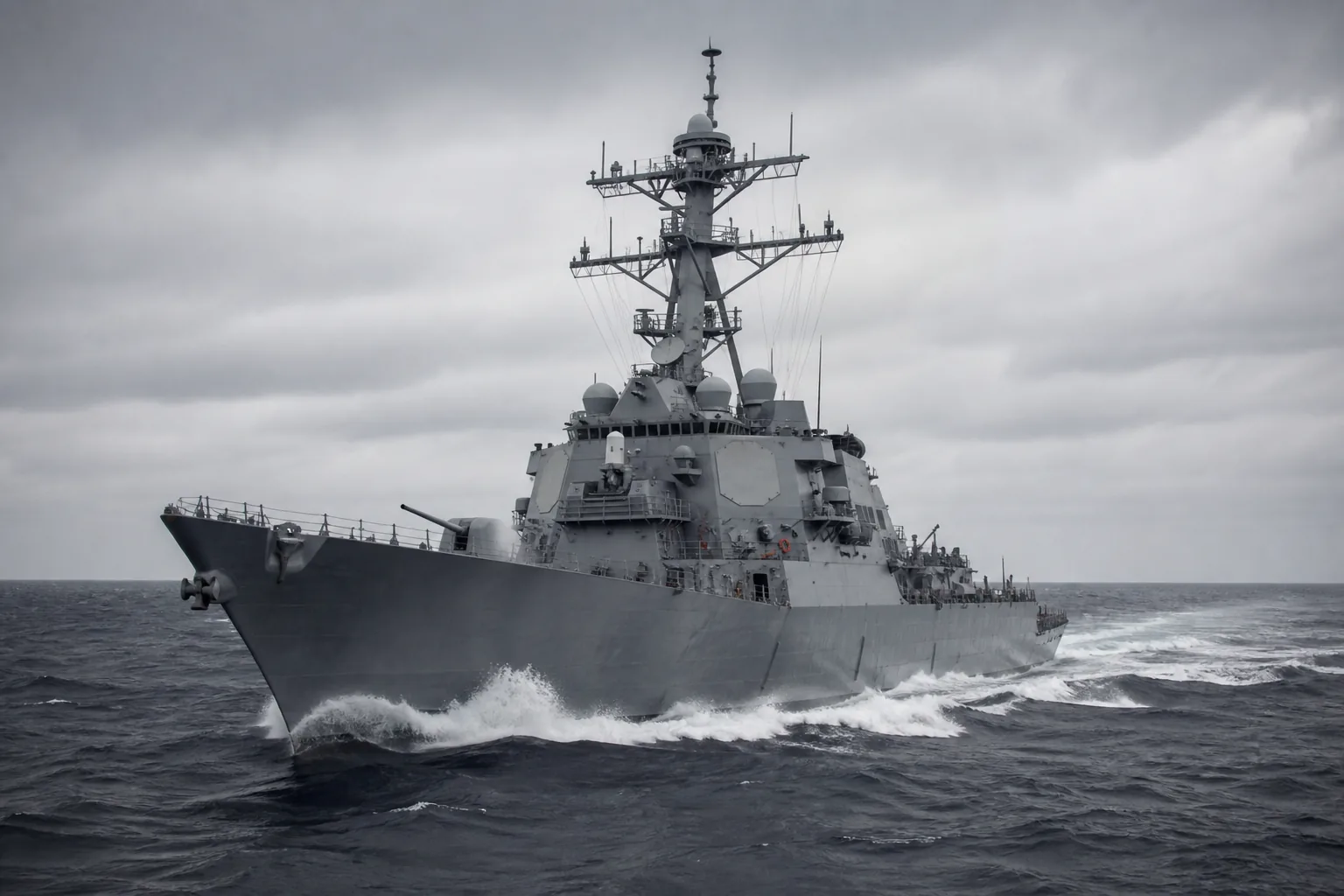
The Navy’s job is presence at distance: being somewhere far away, for a long time, with enough capability to matter. Almost every distinctive feature of the service follows from that: the way it organises into geographic fleets, the way it deploys in groups and not as single ships, and the disproportionate importance of the unglamorous ships that carry fuel, food and ammunition.
Numbered fleets
Naval operations are organised geographically into numbered fleets. The Second and Fourth cover the Atlantic and Latin America, the Third and Seventh the eastern and western Pacific, the Fifth the Middle East, the Sixth the Mediterranean and Europe, and the Tenth is the Navy’s cyber command rather than a sea area.
A numbered fleet is a command relationship and not a permanent collection of ships. A destroyer sailing from Norfolk belongs to one fleet when it leaves and another when it arrives, and the transfer is administrative. What the fleet provides is a headquarters that knows its ocean, its partners and its problems.
The Sixth Fleet’s deployment off Beirut between 1982 and 1984 is a useful illustration of what a numbered fleet actually does: it put Marines ashore, sustained them from the sea, provided their air support, their naval gunfire and their casualty evacuation, and eventually took them home again. All of that is fleet work, and only a small part of it involved firing anything.
Strike groups
Ships deploy in groups because the capabilities they need are distributed across several hulls. Air defence is layered: a screen of destroyers and cruisers covering different ranges and altitudes. Anti-submarine warfare needs helicopters, towed sonar arrays and frequently a friendly submarine. Strike capacity is the sum of the group’s missile magazines.
The carrier strike group is the best-known form: a carrier, its air wing, escorting surface combatants, and usually a submarine. The amphibious ready group is the same logic applied to putting a Marine force ashore. In both cases the group is what deploys, what is counted, and what can be tasked.
Naval aviation
Carrier aviation is expensive because operating from a moving deck imposes costs throughout the airframe: strengthened landing gear and a tailhook for arrested recovery, structure able to absorb catapult loads, folding wings for the hangar, and corrosion protection for years at sea. That weight costs range and payload.
What it buys is an airfield that does not require anyone’s permission. A carrier air wing can operate where no host nation has agreed to basing, and it can move several hundred miles overnight. The composition of the air wing: the mix of strike fighters, electronic-attack aircraft, airborne early warning and unmanned tankers, is a reasonable indicator of what naval aviation expects to fight next.
The submarine force
The submarine force divides into two very different missions. Attack submarines hunt other submarines and surface ships, launch cruise missiles, and collect intelligence in places surface ships cannot go unobserved. Ballistic-missile submarines carry out deterrent patrols and represent the most survivable leg of the nuclear triad, precisely because a submarine at sea cannot reliably be found.
Everything about submarine design serves one goal: radiating less noise than the other side can detect. Hull form, propulsor design, machinery mounted on isolating rafts, and crew procedures all exist for that. It is also why the force is publicly discussed less than any other part of the Navy.
Some submarines also carry special operations forces. The Advanced SEAL Delivery System was a dry mini-submarine built to carry SEALs from a host submarine to a shore; the only one built was badly damaged by a fire in 2008 and the programme was later cancelled.
What sets deployment length
Three constraints, in order. Replenishment: nuclear propulsion removes the fuel limit for the ship but not for its aircraft, and not for food, spare parts or ordnance. Crew endurance: a warship’s company is at sea continuously, and effectiveness degrades. Maintenance cycles — every extension borrows from a scheduled availability, and deferred maintenance compounds.
This is why fleet size matters more than it appears. Sustaining continuous presence in one ocean area requires several groups: one deployed, one working up, one in maintenance. A fleet that looks large enough on paper can be unable to keep a single group permanently on station once those cycles are accounted for.
Where to go next
- Ships and submarines What each class of warship is for at sea.
- The Marine Corps Expeditionary organisation and the air-ground team.
- Military careers How to join, what qualifies you, and what the first year looks like.
- Military aircraft Roles, fleets and the limits of air power.
- Somali piracy in 2008 Why warships in the Gulf of Aden could not simply stop it.
Questions and answers
What is a numbered fleet?
A geographic command responsible for naval operations in a defined ocean area: the Sixth Fleet in the Mediterranean, the Seventh in the western Pacific, the Fifth in the Middle East, and so on. Ships are assigned to a numbered fleet when they enter its area and pass to the next when they leave. The fleet is a command relationship, not a fixed set of hulls.
What does a carrier strike group contain?
A carrier with its embarked air wing, several guided-missile destroyers and often a cruiser providing layered air defence and strike capacity, usually an attached submarine, and replenishment ships in support. The group is the unit of account because no single element of it is survivable or sustainable alone.
How long is a Navy deployment?
Historically around six months for a strike group, though deployments have run considerably longer when demand exceeded the number of available groups. Length is set by replenishment, crew endurance and maintenance cycles, and extending it borrows from the maintenance that follows.
Are Marines part of the Navy?
The Marine Corps is a separate armed service inside the Department of the Navy. Marines deploy aboard Navy ships and rely on the Navy for lift and much medical support, but they have their own commandant, doctrine and budget.
Why is the submarine force so rarely discussed?
Because detection is the entire contest. A submarine that has not been detected chooses whether to engage; one that has been detected is being hunted. Capability information that would help an adversary listen more effectively is therefore held closely, by every navy that operates submarines.