
Promotions
Military Promotions: Time, Points, Boards and Up-or-Out
Advancement starts out nearly automatic and becomes sharply competitive. Where the transition happens, and how the competition is judged, differs between enlisted, warrant and commissioned tracks.
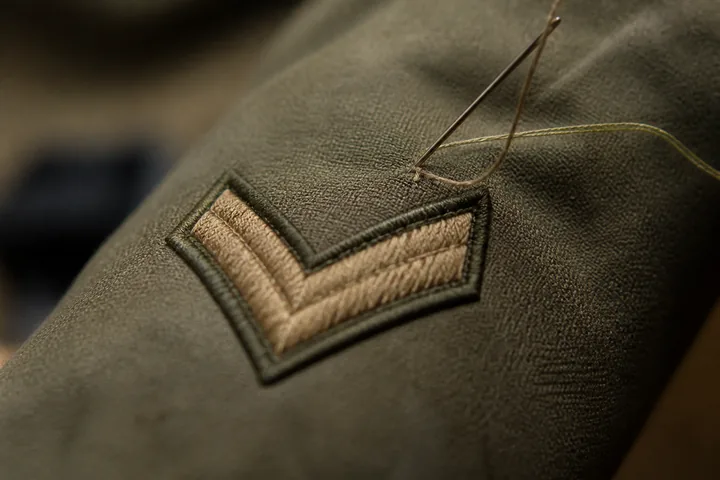
Promotion in the American military moves through three regimes. In the junior enlisted grades it is largely a function of time served and time in grade, with authority held locally and satisfactory performance the only real test. In the middle grades it becomes competitive, judged on an accumulated record. At the senior levels it is a centralised selection against a small number of vacancies, with service-wide competition.
The transition between regimes is where careers are decided, and it arrives earlier than most people expect. The record that a promotion board reads is built years in advance out of evaluations, schools completed, assignments held and qualifications earned: none of which can be assembled retroactively.
The variable nobody mentions at the recruiting office
Promotion is competition for vacancies inside a specialty, not across the service. Each job field has an authorised strength at each grade, and advancement depends on how full that field currently is. An overstrength field promotes slowly regardless of individual quality; an understrength one promotes quickly.
The practical effect is large. Two people who enlist on the same day with comparable records can reach the same grade several years apart purely because they chose different specialties. Anyone weighing job options at enlistment should be asking about the promotion history of each field, not only about the training and the bonus.
Tracks
Six bands- 01 Junior enlisted Largely time-based advancement through the first grades, with local authority.
- 02 Noncommissioned officers Competitive selection on points, evaluations and professional schooling.
- 03 Senior NCOs Centralised boards, service-wide competition, and very limited vacancies.
- 04 Warrant officers A technical track entered laterally, with its own progression.
- 05 Company-grade officers Near-automatic to captain if performance is satisfactory and schooling complete.
- 06 Field-grade officers Selection boards against a fixed quota, with up-or-out consequences.
What a board actually reads
A centralised selection board sees a file, not a person. It reads performance evaluations across several years, the assignments held and their difficulty, professional military education completed, awards, and any adverse material. What it cannot see is context that was never written down, which is why the quality of the evaluations a supervisor writes is one of the more consequential administrative acts in the institution.
Two patterns matter more than any single entry. Trajectory, whether performance is improving and whether assignments are getting harder. Breadth: whether the record shows the range the next grade requires, since senior grades are expected to operate outside a single narrow specialty.
The officer system adds a hard constraint on top: selection quotas are fixed, so a strong record can still be non-selected because the year group was strong and the vacancies few. Under up-or-out rules, repeated non-selection ends the career. That is the system working as designed and not failing, which does not make it feel fair to the individual.
Two features of the system cause most of the confusion. The first is that advancement is competitive against a quota and not against a standard: meeting every requirement makes someone eligible, not selected, and in a year when few vacancies exist a strong record can go unselected without anything having gone wrong. The second is that the record is assembled over years by people who have since moved on, so by the time it is read it cannot be materially changed — which is why the advice that matters is about what gets written down at the time, not about how to present it later.
The practical consequence is that timing is part of the outcome. Being in a large cohort, or arriving at a grade when the service is contracting, changes the odds independently of performance, and the same file can be selected in one year and passed over in the next. Careers that look like steady progression usually contain at least one of those years.
Questions and answers
What does up-or-out mean?
That officers not selected for the next grade within a defined window are separated or retired and not remaining indefinitely. The system exists to keep the officer corps from stagnating at the top, and it means a career is a sequence of selections rather than a matter of length of service.
How are enlisted promotion points calculated?
By a service-specific formula combining evaluations, professional military education, weapons qualification and physical fitness, awards, and civilian and military education, against a cut-off score that varies by job field. Because the cut-off moves with vacancies in each specialty, two soldiers with identical records can be promoted years apart in different fields.
Why does the job field matter so much?
Because promotion is competition for vacancies inside a specialty, not across the whole service. An overstrength field promotes slowly no matter how good its people are; an understrength one promotes quickly. This is one of the more consequential and least discussed factors in choosing a specialty at enlistment.
Does time in service still guarantee anything?
Only in the earliest grades, where advancement is largely automatic once time-in-service and time-in-grade requirements are met and performance is satisfactory. Everything above that is selective, and beyond the senior enlisted and field-grade levels it is sharply so.