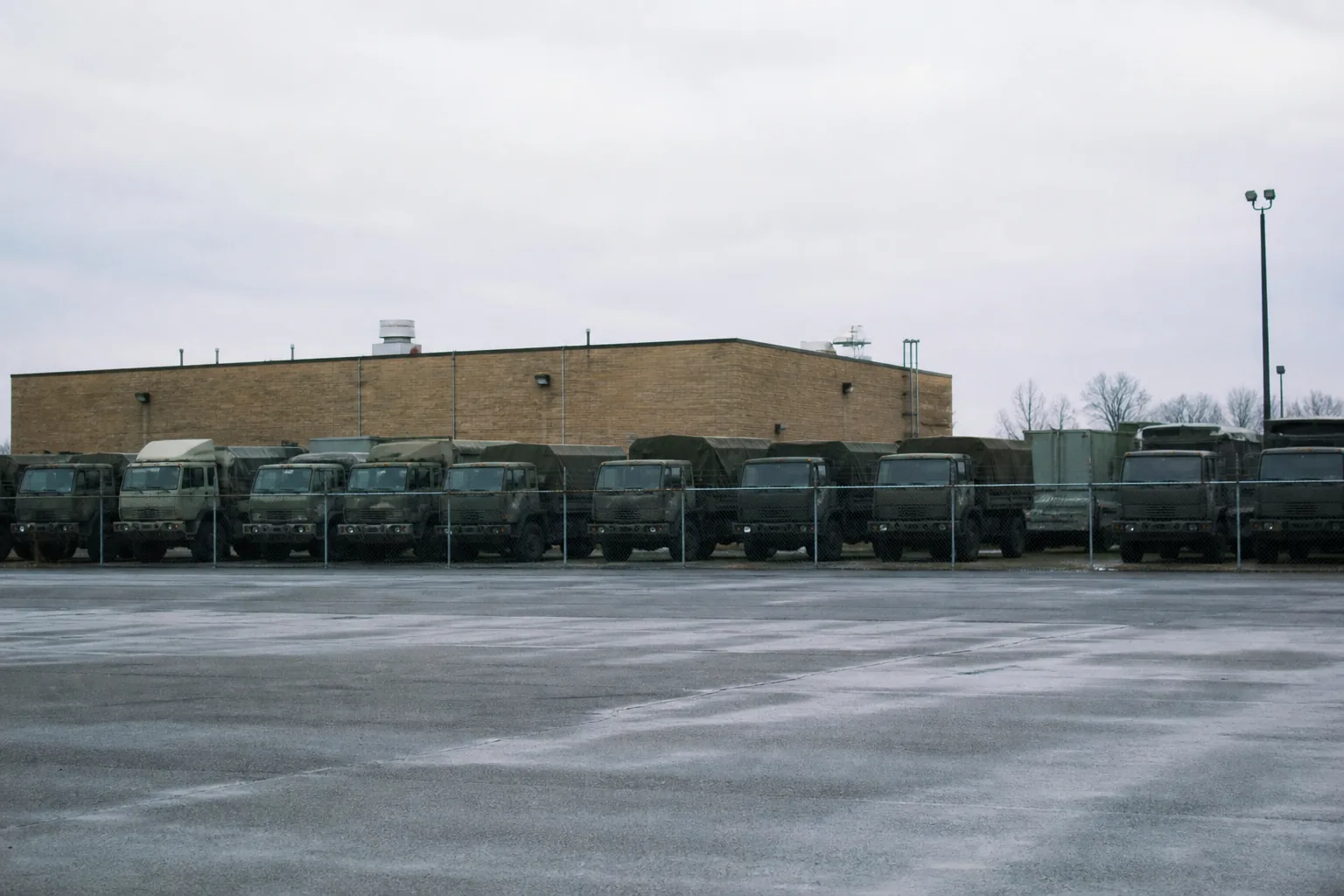
Army Reserve
The Army Reserve: Federal Service Only, and Where the Enablers Live
The Reserve has no governor in its chain of command and holds most of the Army's enabling capability: transport, medical, engineer, sustainment.

The Army Reserve is the federal reserve component: soldiers who serve part-time under federal authority, with no state mission and no governor anywhere in their chain of command. That single fact distinguishes it from the National Guard and explains most of what else is different.
What the Reserve holds
Among the reserve components the Guard holds most of the combat power: armoured and infantry brigade combat teams, artillery, combat aviation. The Reserve holds most of the enabling capability:
- transportation and movement control
- medical units, from field hospitals to specialist teams
- engineer units, both combat and construction
- military police
- civil affairs and psychological operations
- sustainment, supply and maintenance
- legal, finance, public affairs and chaplain support
This is not a hierarchy of importance. A brigade combat team without transportation does not move, without medical support cannot take casualties, and without sustainment stops in days. The Reserve is where a large part of that lives, which is why a sustained operation of any size pulls on it immediately.
The consequence for deployment
People considering the Reserve sometimes assume that holding support units means a lower chance of deploying. The record does not support that. Because enabling capability is concentrated in the Reserve rather than duplicated in the active component, Reserve transportation, medical, engineer and civil affairs units deployed repeatedly and for long periods through the Iraq and Afghanistan years.
What differs is the shape of the deployment. Support units are frequently split, with detachments attached to several different formations rather than the whole unit going to one place, and they often deploy for longer because the requirement is continuous and not tied to a combat rotation.
Status, and why it is simpler than the Guard’s
A Guard soldier moves between three legal statuses depending on who is commanding them. A Reserve soldier does not: Reserve service is federal, and activation means Title 10 federal service. That is administratively simpler and it removes an entire category of confusion, but it also removes the state-emergency role some people specifically want.
The commitment in practice
Initial entry training is the same basic training and job school the active component attends, which takes months. After that the baseline is a weekend a month and roughly two weeks a year.
That baseline is honest as a floor and misleading as a description. Professional military education, additional duty, and deployment rotations accumulate, and the unpredictability falls on civilian employers and families as much as on the soldier. Federal law protects employment and reemployment rights around military service, and those protections depend on notice and documentation, not applying automatically.
Choosing between Reserve, Guard and active duty
The short version, since this is the decision most readers are actually making:
Active duty is full-time, with frequent moves and the deepest career and benefits structure.
National Guard keeps you in one state, adds a domestic emergency mission, and holds most of the reserve combat formations, so if you want a combat arms specialty part-time, this is usually where it is.
Army Reserve keeps you federal, without a state mission, in a support or technical specialty — and those specialties tend to transfer most directly into civilian employment.
Which is right depends on the job field you want, whether you need to stay in one place, and how much unpredictability your civilian life can absorb.
The component’s defining difficulty is that it holds capabilities the active force cannot afford to keep full-time and cannot operate without. That makes it simultaneously a reserve and a single point of failure, and it is why mobilisation policy attracts attention out of proportion to the numbers involved.
Where to go next
Questions and answers
How is the Army Reserve different from the National Guard?
The Reserve is purely federal: no state mission, no governor in the chain of command, and it cannot be activated for a state emergency. The Guard exists in every state and territory with a dual state and federal role. The Reserve also holds a different mix of capability: mostly enabling and support units and not combat formations.
Why does the Reserve hold the support units?
Because the split follows from the Guard's state mission. A governor responding to a disaster needs organised combat formations with vehicles, communications and command structure. The federal force needs transport, medical, engineer, military police, civil affairs and sustainment capacity it does not have to keep on full-time pay. The division is deliberate and it is old.
Does that make the Reserve less likely to deploy?
No, arguably the opposite. Because so much enabling capability lives in the Reserve, almost any sustained operation requires Reserve units. Transportation, medical and civil affairs formations have deployed repeatedly and heavily.
What is the time commitment?
The baseline is one weekend a month plus about two weeks of annual training, after initial entry training. In practice schools, additional duty and deployment rotations add to that, and some specialties are considerably busier than the baseline suggests.
Do Reserve skills transfer to civilian work?
More directly than most Army specialties, because the Reserve concentrates on functions that exist in the civilian economy: logistics, transport, medical, engineering, legal, public affairs, cyber. That is one of the more practical reasons people choose the Reserve over the Guard.