Armour
Tanks and Armoured Vehicles: Protection, Mobility and What They Cost
Every armoured vehicle is the same argument settled differently: protection, mobility and firepower, with weight as the currency. What a vehicle gives up tells you what it was built to do.
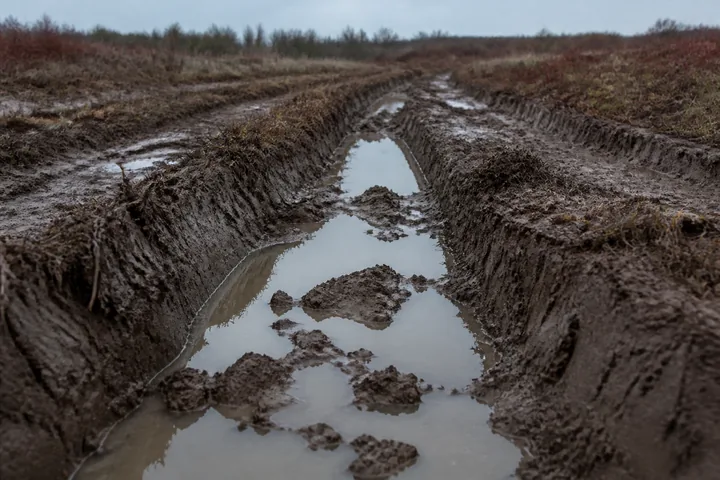
Armoured vehicle design is a closed system with three competing demands. Protection adds weight. Weight costs mobility, not only cross-country speed but the strategic mobility that decides whether the vehicle can be shipped, flown or driven to where it is needed, and whether it can cross the bridges on the way. Firepower adds weight too, in gun, ammunition and turret structure. Nothing can be improved without something else being paid.
That is why classes exist instead of a single optimum. A main battle tank accepts extreme weight to survive direct fire and deliver it. A wheeled combat vehicle accepts thinner protection to arrive quickly and operate on roads. A mine-resistant vehicle accepts poor cross-country performance and a high centre of gravity to survive a buried charge. Each is the right answer to a different question.
Protection is deliberately unequal
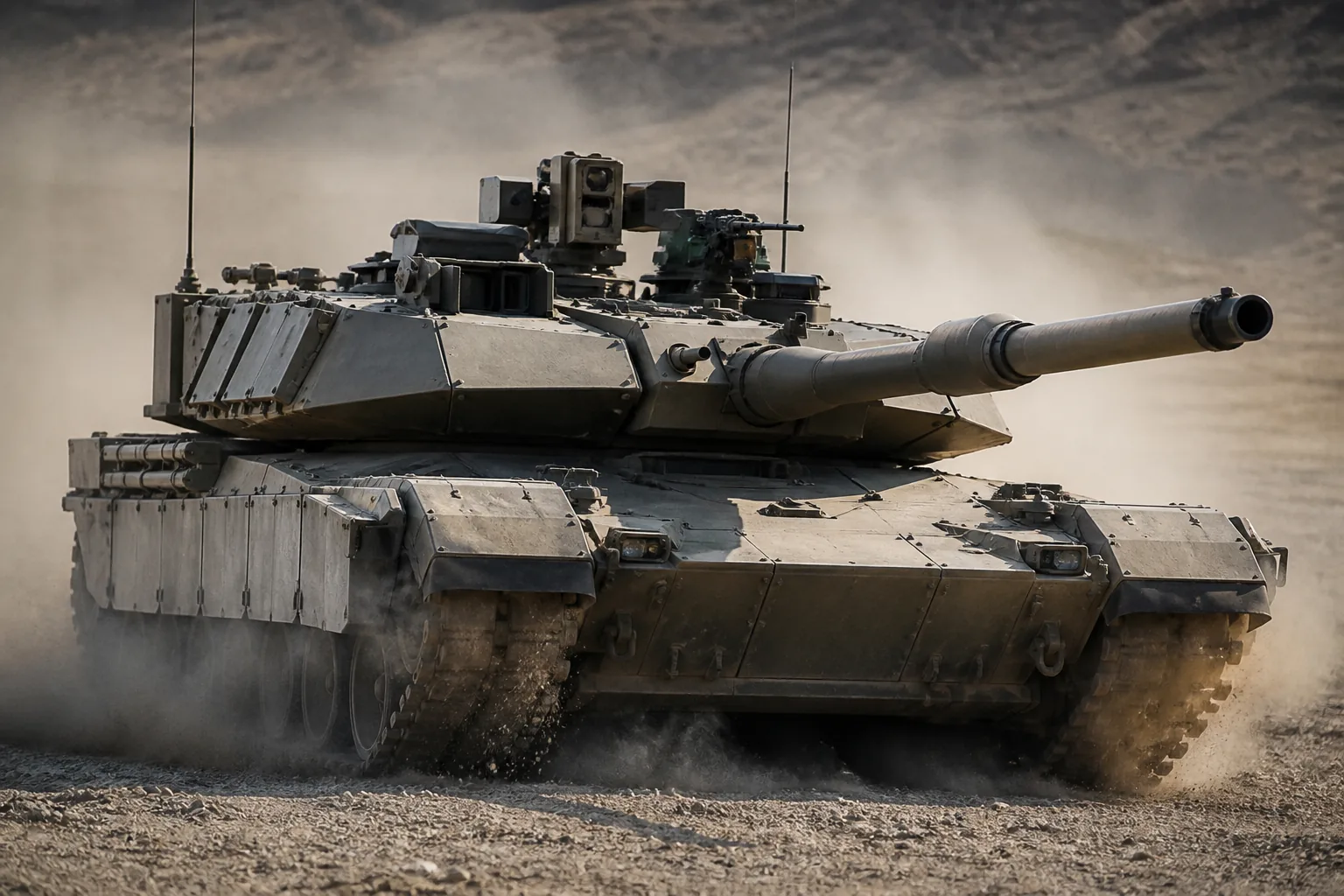
Armour is concentrated where the threat is expected. The frontal arc of a main battle tank is protected to a standard the sides, rear, roof and belly are not, because carrying that protection all round would make the vehicle immovable. This is a design decision, not an oversight, and it is the reason armour is employed with its front toward the enemy and with other arms covering the flanks.
Recent conflicts have added pressure from above. Loitering munitions and drone-dropped charges attack the roof and engine deck, the thinnest surfaces on the vehicle, which has pushed interest toward overhead screens, active protection systems and (more effectively) toward denying the drone its view in the first place.
Classes
Six classes- 01 Main battle tanks Heavy protection, a large-calibre gun and tracked mobility in one vehicle.
- 02 Infantry fighting vehicles Carry a dismount squad and fight alongside it with a cannon and missiles.
- 03 Armoured personnel carriers Protected transport, armed for self-defence and not for the fight.
- 04 Wheeled combat vehicles Strategic and operational mobility traded against protection and cross-country reach.
- 05 Protected mobility Mine-resistant vehicles built around surviving buried charges.
- 06 Self-propelled artillery Howitzers on tracked or wheeled chassis, able to shoot and move.
Armour does not operate alone
The formation, not the vehicle, is the unit of armoured capability. An armoured brigade combat team pairs tanks with infantry fighting vehicles, engineers who breach obstacles and clear mines, artillery that suppresses anti-tank positions, air defence, and the logistics to move fuel and ammunition forward at the rate armour consumes them.
Fuel is the constraint that surprises people. A tracked formation's consumption is high enough that its operational reach is set by the tanker trucks behind it, and a thrust that outruns its fuel is a thrust that stops. Ammunition resupply works the same way.
Infantry is the other half of survival. Dismounted soldiers clear the close terrain (buildings, treelines, reverse slopes), where an anti-tank team would otherwise wait unseen for a flank shot. Armour that advances without infantry into that kind of ground is the recurring image of armoured losses, and it has been since the first tanks were used.
Armour is only half of survivability and the other half is the infantry alongside it. Close terrain hides anti-tank teams at ranges where armour cannot use its own advantages, so a tank operating without dismounted troops clearing buildings, treelines and reverse slopes is considerably more vulnerable than the same vehicle in the open.
Profiles
2 in the index- The M1 Abrams: The Turbine Decision and Its Consequences A tank whose most consequential design choice was its engine, because the engine determined the logistics tail every formation operating it has to carry.
- The M2 Bradley: What an Infantry Fighting Vehicle Is Actually For Not a light tank and not a truck. It exists to bring infantry to the fight protected, and then to support them with fire once they are out of it.
Questions and answers
Are tanks obsolete?
The claim is made after every conflict in which tanks are lost, and it has not held so far. What recent fighting has shown is that a tank operating without infantry, engineers, air defence and drone screening is easy to kill, which was already doctrine. The vehicle that survives is the one inside a combined-arms formation; the one that burns is usually the one that was alone or in a column.
Why does weight matter so much?
Because it decides whether the vehicle can get to the war. A sixty-tonne tank needs heavy-equipment transporters, rail flats or roll-on ships, and bridges rated to carry it. Lighter vehicles deploy faster and reach places heavy armour cannot, and they pay for it in protection. Every armoured vehicle programme is an argument about where on that line to sit.
What is the difference between an IFV and an APC?
An armoured personnel carrier delivers infantry and stays out of the fight where it can, typically armed with a machine gun. An infantry fighting vehicle is expected to fight: it carries an autocannon and often anti-tank missiles, and it supports the squad it dismounted as opposed to withdrawing.
How is armour protection measured?
Not by thickness. Modern protection is layered: composite and reactive armour, spaced arrays, spall liners, active systems that intercept incoming rounds, and it is deliberately unequal, with the frontal arc protected far more heavily than the sides, roof and belly. Published protection levels refer to specific threats from specific angles, not to an all-round rating.