National Guard
The National Guard: Why It Answers to a Governor and a President
The Guard serves under a governor for domestic missions and under the President when mobilised. That dual status explains everything else.
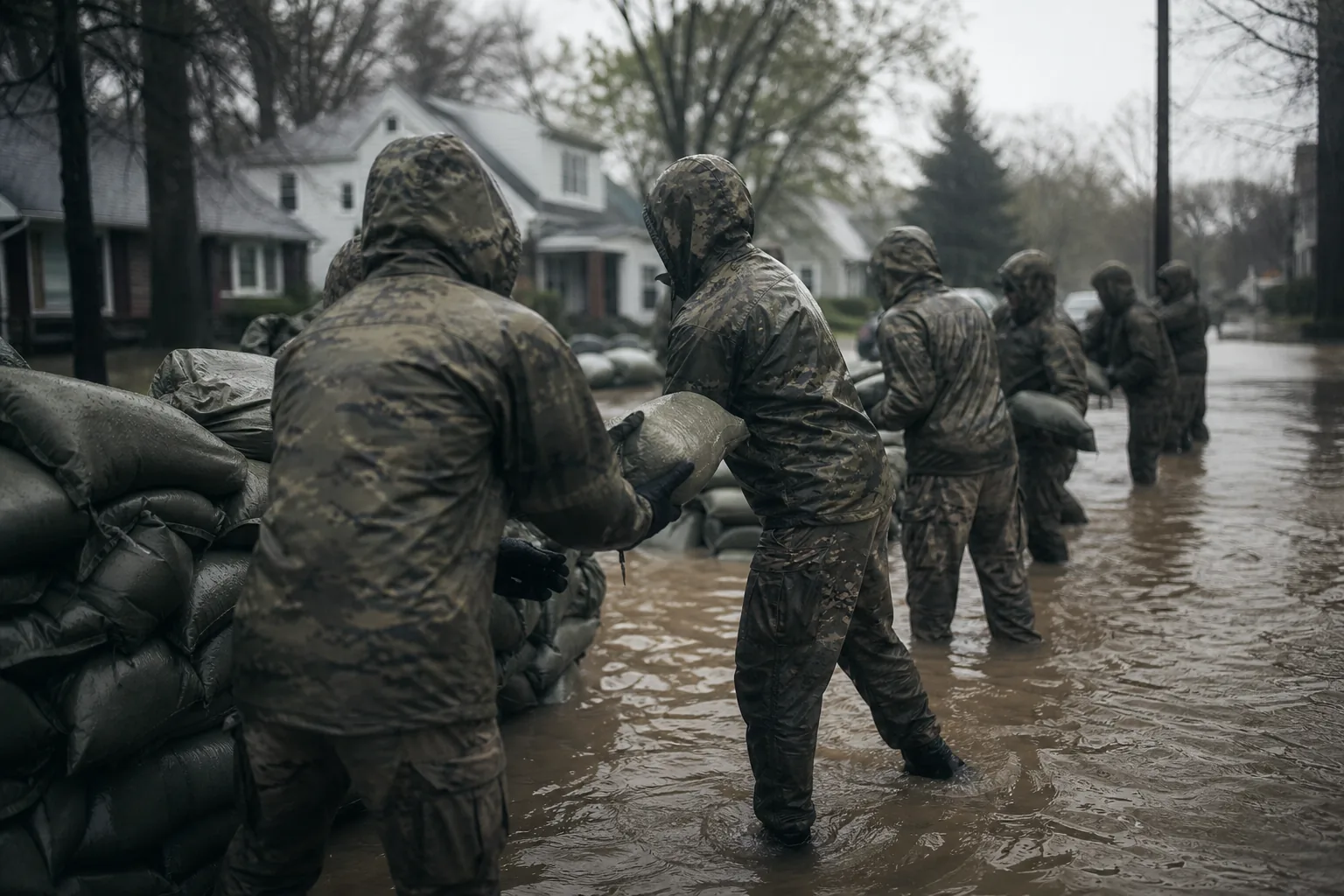
The National Guard is the only part of the American military that answers to two different governments. Understanding that dual status explains nearly everything else about it: why its units are organised by state, why the same soldier can be responding to a flood one month and mobilising for an overseas deployment the next, and why questions about what the Guard “can” do almost always turn out to be questions about which legal status it is in.
Three statuses, three chains of command
The Guard operates in one of three statuses, and the differences are not administrative trivia.
State active duty. The governor calls up Guard members under state law and the state pays. This is the status used for most domestic emergencies: storms, floods, wildfires, civil support. The governor commands.
Title 32. The member is in federal pay status but remains under state control. Most training (the drill weekends and annual training) happens here, as do some federally funded domestic missions. The federal government pays; the governor still commands.
Title 10. The member is mobilised into federal service. The governor drops out of the chain entirely and the unit is employed exactly as an active-component unit would be. This is the status for overseas deployment.
The practical consequence is that the same unit has different authorities, different funding and different limits depending on which status it is in, and that transitions between statuses are deliberate legal acts rather than paperwork.
Why the Guard holds combat formations
Among the reserve components, the National Guard holds most of the combat power (armoured and infantry brigade combat teams, artillery, combat aviation brigades), while the Army Reserve holds most of the enabling capability: transportation, medical, engineer, military police, civil affairs, sustainment.
That division is deliberate and it is old. It follows from the Guard’s state role: a governor responding to a disaster needs organised units with vehicles, communications, engineers and command structure, which is what a combat formation provides. It also means that a large-scale federal mobilisation cannot happen without the Guard, because a meaningful share of the Army’s manoeuvre formations sit inside it.
What the commitment actually looks like
The recruiting figure is one weekend a month and two weeks a year, and it is accurate as a baseline and misleading as a description. Initial entry training is the same basic training and job school the active component attends, taking months. After that, the drill weekend is real but so are schools, additional duty, state activations and (for many specialties) deployment rotations.
Members who joined expecting a strictly part-time obligation and then served multiple mobilisations are a well-documented part of the Guard’s recent history. The honest summary is that Guard service is part-time in structure and unpredictable in practice, and that the unpredictability falls on civilian employers and families as much as on the member.
Employment and legal protection
Because Guard members hold civilian jobs, federal law protects their employment and reemployment rights around military service, and separate provisions cover certain financial and legal obligations during activation. These protections matter and they are not automatic: they depend on notice, documentation and, sometimes, on enforcement.
This is also where the difference between statuses reappears: the protections attached to a federal mobilisation are not identical to those attached to a short state activation, and members who assume otherwise have been caught out.
The comparison people actually want
Most people arriving at this subject are choosing between the Guard, the Reserve and active duty. The short version:
- Active duty is full-time service with frequent moves and the deepest career and benefits structure.
- The National Guard keeps you in one state, gives you a domestic mission alongside the federal one, and holds most of the reserve combat formations.
- The Army Reserve keeps you federal only, without a state mission, and concentrates on enabling and support specialties — which often means better civilian-transferable skills.
Which is right depends on whether you want to stay in one place, what job field you want, and how much unpredictability your civilian life can absorb.
Where to go next
- The Army Reserve A federal reserve component and how it differs from the Guard.
- Comparisons Branch against branch, path against path, system against system.
- Military careers How to join, what qualifies you, and what the first year looks like.
- Military families Deployment, moving, housing and education.
Questions and answers
Who does the National Guard actually work for?
Both a governor and the President, depending on the status it is in. Under state active duty or Title 32 status it operates under the governor of its state for domestic missions, paid federally in the latter case. Under Title 10 status it is mobilised into federal service and operates exactly like the active component. The status determines the chain of command, the pay, the legal authorities and what the unit may do.
How is the Guard different from the Army Reserve?
The Reserve is purely federal. It has no state mission and no governor in its chain of command. The Guard exists in every state and territory, has a domestic emergency role, and holds most of the combat formations among the reserve components, while the Reserve holds most of the enabling and support capability. Practically, this decides where you drill and who can call you up.
How much time does Guard service take?
The traditional commitment is one weekend a month and roughly two weeks of annual training, plus initial entry training when you join. That figure understates reality for many members: deployments, state emergency activations, schools and additional duty add up, and some specialties are considerably busier than the baseline.
Can Guard members be deployed overseas?
Yes, and they have been extensively. Guard formations were mobilised repeatedly for Iraq and Afghanistan and have deployed for operations and rotational commitments since. Once federalised, a Guard unit is employed on the same basis as an active-component unit.
Does the Guard have its own air force?
The Air National Guard is the air reserve component of the Air Force, structured the same way as the Army National Guard, state units with a federal mission. It flies fighters, tankers, transports and rescue aircraft, and in several mission areas it holds a substantial share of total capability.