Battles
Fallujah: Two Battles, and What Urban Fighting Costs
Fallujah in 2004 is the reference case for modern urban combat, and it is unusual in providing a controlled comparison: two assaults on the same city seven months apart, the first halted incomplete and the second carried through. The difference between them says more about urban fighting than either does alone.
Why a city is a different problem
Three characteristics compound, and each individually reduces the advantages a technologically superior force normally holds.
Range collapses. Engagements happen at tens of metres, inside buildings and across streets. Sensors that identify targets at kilometres, and precision weapons that engage at them, contribute far less. The fight is decided by infantry with rifles, grenades and demolition charges, supported by direct fire at short range.
Ground does not stay taken. A building cleared is a building that can be re-entered from an adjacent roof, a courtyard or a hole knocked through a party wall. Holding a block means leaving troops on it, which means an advance consumes the force conducting it. This is the arithmetic that makes urban operations manpower-intensive in a way open-country operations are not.
Civilians are present. The firepower that would otherwise substitute for infantry (artillery, air attack) is constrained by their presence, and every constraint transfers cost back onto the infantry.
The first battle, and the interval
The April assault began in response to a specific incident and was halted before completion. The reason was political, not military: the cost of continuing, in Iraqi opinion and internationally, was judged to outweigh the objective. Authority over the city was passed to a locally raised force.
That force did not hold it. Over the following months the city became a base and was extensively prepared: defensive positions, prepared firing points, tunnels between buildings, and improvised explosive devices sited in structures.
So the interval did two things. It gave the defence seven months to fortify, and it gave the eventual assault a much harder problem. An operation halted partway is not a neutral outcome; it is a decision whose cost arrives later.
The second battle
The November assault was larger, better prepared and conducted differently. The population was warned in advance and the great majority left the city.
Its method was methodical rather than rapid. Armour and dismounted infantry worked together in the streets: armour providing direct fire against structures and protection, infantry providing the eyes and the ability to enter buildings, neither able to operate there without the other. Engineers provided demolition. Ground that was cleared was held.
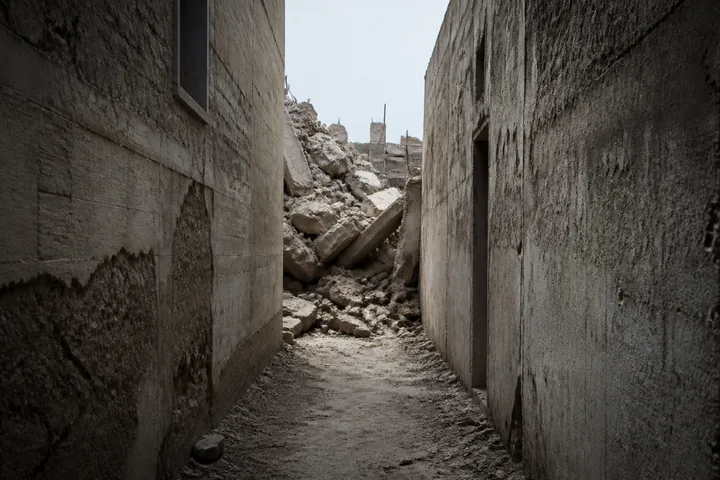
It took weeks and was among the heaviest fighting American forces had experienced since Vietnam. The city itself was very substantially damaged, and that damage is part of the cost of the method, not incidental to it.
What the two battles established
Doctrinally, the battles drove a rewrite of urban training: structure clearing, combined armour-infantry work in streets, casualty evacuation in built-up areas, and (the part that had been weakest) planning for the civilian population as an element of the operation and not as a limitation on it.
Strategically, the more uncomfortable lesson concerns the first battle. Halting an assault for political reasons is a legitimate decision and it is not free. The city was harder to take in November because it had not been taken in April, and the eventual cost (in casualties, in destruction and in the political consequences of that destruction) was higher than it would have been. Both battles are studied together for that reason.
The battle also changed how the rest of the war was described. Urban fighting of that intensity is difficult to report and harder to photograph, and the accounts that reached the public afterwards were shaped by which units journalists happened to be with. That is a limitation of the record rather than of the reporting.
Questions and answers
Why were there two battles?
The first assault in April 2004 was halted before completion when the political cost of continuing (inside Iraq and internationally) was judged too high, and authority was handed to a locally raised force that did not hold. The city was then substantially fortified over the following months, and a second, much larger and better prepared assault was conducted in November. The interval is the reason the second battle was harder.
What makes a city so much harder to fight in?
Three things compound. Fields of fire are measured in metres, so contact happens at ranges where technological advantages in sensors and precision are reduced. Buildings must be cleared individually and can be reoccupied behind an advance, so ground does not stay taken without troops left on it. And civilians are present, which constrains the use of the firepower that would otherwise substitute for infantry.
How were civilians handled?
Before the second assault the population was warned and the large majority left, which is the reason the November battle could be fought as it was. That is the standard approach and it carries its own costs: a city emptied of its population is also a city with a destroyed economy and housing stock, and the reconstruction burden afterwards was very large.
What did the battles change doctrinally?
They drove a substantial rewrite of urban operations training and doctrine: how to clear a structure, how to hold what has been cleared, how to combine armour with dismounted infantry in streets, how to handle casualty evacuation under fire in a built-up area, and how to plan for the population as part of the operation as opposed to as a constraint on it.