
Battles
The Battle of the Bulge: A Winter Offensive Into a Thin Sector
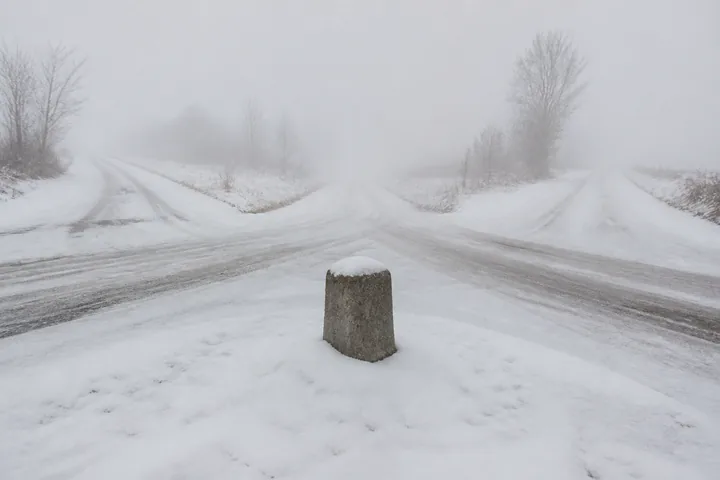
The Ardennes offensive of December 1944 is remembered for the surprise and for the winter, and both are accurate. The more instructive part is why it failed, because it failed for reasons that were built into the plan before it started: not enough fuel, and not enough roads.
The gamble on both sides
The Allied side had taken a deliberate risk. The Ardennes sector was forested, steep and served by few usable roads, and it had been assessed as unsuitable for a major armoured offensive. That assessment was reinforced by an intelligence picture holding that the German army lacked the reserves to mount one. So the sector was held thinly and the formations that would otherwise have been there were used elsewhere.
The German side gambled on exactly that assessment being made. The plan aimed to cross the sector, reach a major port on the coast, and split the Allied armies, an objective that required an advance of a distance the available fuel could not support.
The plan’s answer to that was to capture fuel dumps along the route. This is the fact that most determines the outcome: an offensive that must capture fuel to continue has no tolerance for delay, because a formation that stops is a formation that runs out.
The first week
Surprise was achieved and the initial penetration was substantial. Low cloud grounded aircraft, which removed both Allied air attack and aerial reconnaissance during the critical opening days. Several American divisions in the path of the attack were overrun or forced back badly.
But the terrain that had made the sector seem unsuitable now applied to the attacker. Armour could not move off the forest roads, so the advance was channelled through a small number of routes, each of which passed through a junction town.
Where those junctions were held, the advance stopped. The defence of two of them (one by a surrounded airborne division, one by an improvised force fighting delaying actions at successive crossroads) cost the offensive days. In a plan with no fuel margin, days were the resource that could not be recovered.
Why it collapsed
Three factors converged in the second week.
Fuel ran short because the dumps were not captured. Formations halted for want of it, and some vehicles were abandoned, not lost in combat.
The weather cleared. Air attack on the roads and on supply columns strung out along them resumed, and in terrain with no alternative routes and no cover from the air, an armoured column on a forest road is an exceptionally poor place to be.
Reserves arrived. Allied formations were redirected into both flanks of the penetration faster than the offensive’s planners had assumed possible, which is a direct consequence of the road and rail network behind the Allied line being intact and the attacker’s not being.
By January the salient was being reduced, and by the end of the month the line was substantially where it had been.
What was actually decided
The offensive did not change the outcome of the war and it did change its timetable, delaying Allied operations by weeks and inflicting heavy casualties on both sides.
Its more lasting significance is as a case study in two things. The first is accepted risk: a thin sector is a decision, and the question is whether the reserves exist to respond when the risk is called. The second is the relationship between a plan and its logistics. An operation whose fuel calculation depends on capturing the enemy’s fuel is not a plan with a risk in it; the risk is the plan.
The offensive’s failure was visible in its fuel plan before it was visible on the map: it depended on capturing supplies it did not carry.
Questions and answers
Why was that sector so lightly held?
Because it was a deliberate risk. The Ardennes is forested, steep and poorly roaded, and it had been assessed as unsuitable for a large armoured offensive, an assessment made easier by the belief that the German army no longer had the reserves for one. Holding it thinly freed formations for offensives elsewhere, and the risk was accepted knowingly, not overlooked.
What made the weather so important?
It grounded aircraft. Allied air superiority was the single largest advantage in the theatre, and low cloud removed it for the first critical days, along with aerial reconnaissance. When the weather cleared around a week in, air attack on the roads and supply columns became one of the principal causes of the offensive stalling.
Why did the offensive fail?
Fuel and roads. The plan required capturing fuel stocks en route because there was not enough to reach the objective otherwise, and it required moving large armoured formations along a small number of forest roads. Delays at road junctions (several caused by small units holding out longer than expected) compounded until the timetable was unrecoverable, and then the weather cleared.
What was the significance of the road junction towns?
They were the battle. In terrain where armour cannot move off the roads, whoever holds a junction controls whether a division advances. The defence of two of them in particular, by forces that were surrounded and substantially outnumbered, cost the offensive days it did not have and is the reason the timetable collapsed.