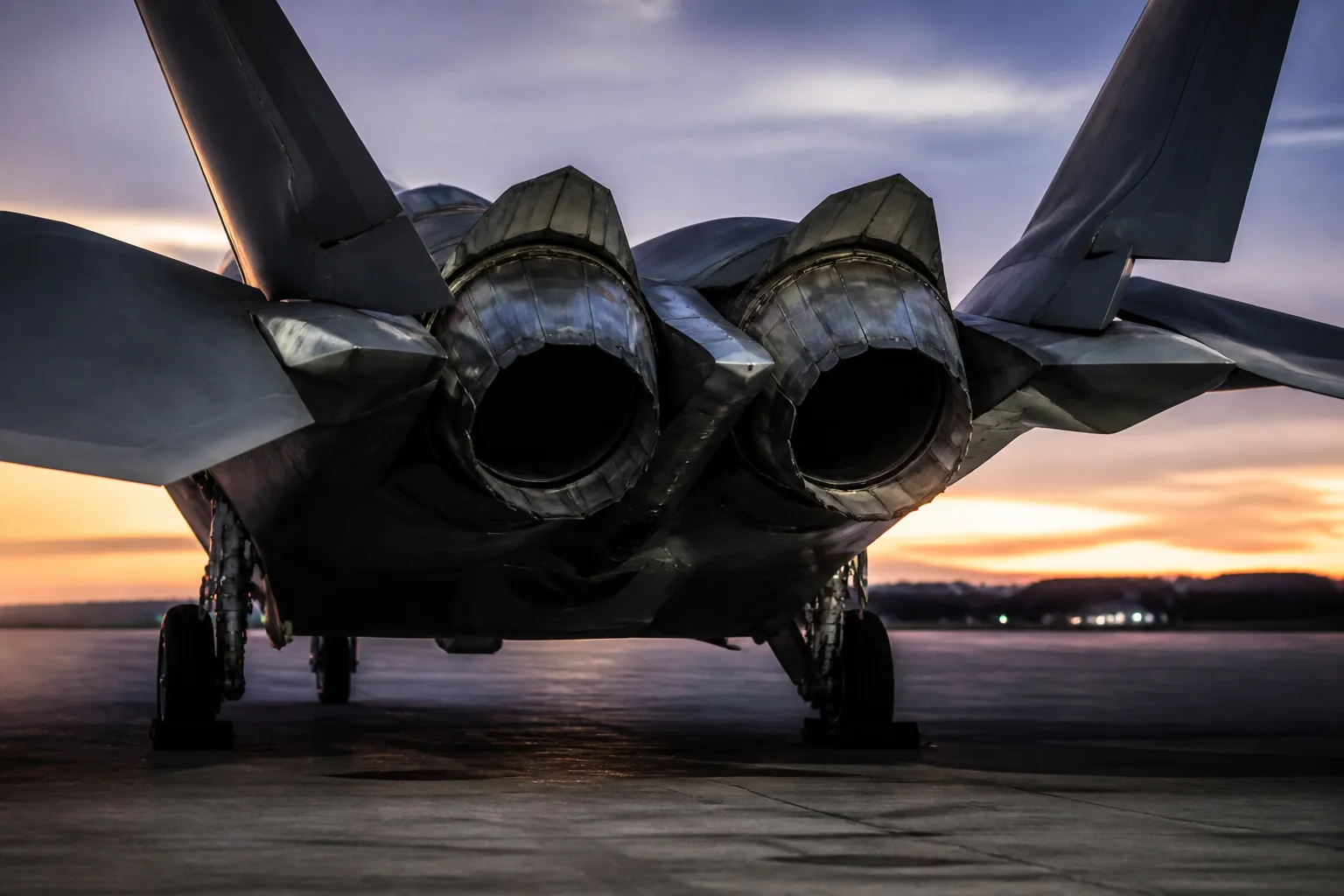
Aircraft
The F-22 Raptor: Built for One Job, and Built Before Its Time
The F-22 is an unusual case: an aircraft that is broadly agreed to be exceptionally good at its job, produced in a number small enough that the job is difficult to do routinely. Both facts have the same cause, which is that it was designed for one war and delivered into another.
The requirement it was designed against
The aircraft was conceived in the 1980s to establish air superiority against a large, capable adversary air force over Europe. Every design choice serves that single objective.
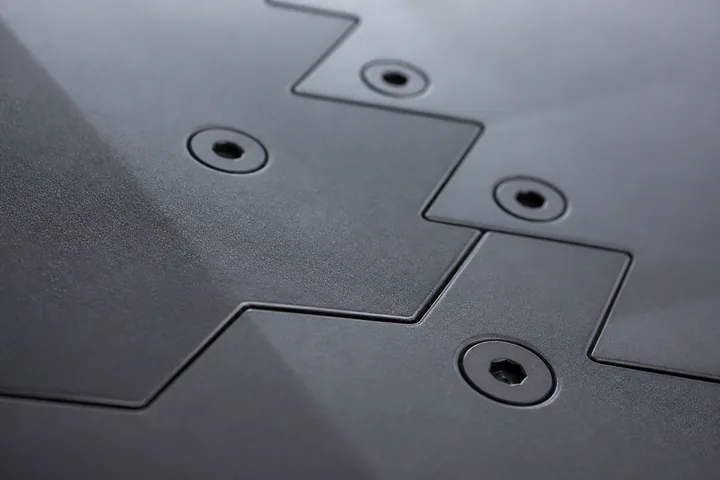
Signature reduction to be detected late. Supersonic cruise without afterburner, to arrive and depart quickly without consuming fuel at the rate afterburner requires. Sensors and avionics to detect and identify first. Thrust vectoring for manoeuvring authority at extremes of the envelope. Weapons carried internally, because external pylons would negate the shaping.
There is no compromise in the design toward ground attack, endurance or cost. It is a single-purpose aircraft, which is why it is good at that purpose.
What changed before it arrived
By the time it entered service the immediate operational demands were ground attack, surveillance and persistence in conflicts where nobody contested the airspace. An air superiority fighter has little to contribute to a campaign where air superiority is assumed on day one.
Production was ended well short of the original plan on those grounds. The decision has been argued about continuously since, and the argument sharpened as peer air competition returned to the centre of planning: a fleet sized for a threat that was judged to have receded, in a period when it was judged to be returning.
Why the fleet size shapes how it is used
A small fleet cannot be used casually, and this is the practical consequence that matters most.
Sustaining any deployment requires a rotation (aircraft in maintenance, aircraft working up, aircraft deployed), so a single commitment consumes a substantial fraction of the total. Attrition cannot be replaced, because the line is closed. The aircraft is therefore managed as a capability to be preserved, not one to be spent, which constrains where and how often it appears.
It also concentrates sustainment risk. A specialised fleet with a closed production line depends on a supply chain that has no other customer, and parts obsolescence becomes an engineering programme rather than a purchase.
Built before the network
The most interesting limitation is one nobody designed in. The aircraft was built before the assumption that every platform shares its picture with every other one became standard, so its data links were designed for a different era of interoperability and have required subsequent work to connect it to aircraft designed a decade later.
That is the neatest illustration of what happened to this programme generally. A design executed extremely well against a requirement that was correct when it was written, delivered into a world where the requirement had moved — and the aircraft’s excellence at its original job is the reason it is still in service and still without a direct replacement.
Scarcity changed the aircraft’s role as much as its design did. A fleet too small to risk routinely is held for the situations that justify it, which means its most common contribution is not a sortie at all but the planning assumption that it could fly one. That is a real effect and an awkward one to measure, because it shows up in what an opponent chooses not to attempt rather than in anything the aircraft did. It also makes the fleet difficult to argue for in a budget, since the case rests on events that did not happen and cannot be counted afterwards.
Questions and answers
Why was production ended early?
Because the requirement it had been designed against had changed. The aircraft was conceived to defeat a large adversary air force in a European war, and by the time it was in production the immediate demands were for ground attack and surveillance in conflicts where air superiority was not contested. The decision was made on those grounds and has been contested ever since, particularly as peer air competition returned to planning.
Is it better than the F-35?
At air superiority, generally yes, because that is the single job it was designed for and it makes no concessions to any other. At everything else the comparison inverts: the F-35 carries a more modern sensor and networking suite, was designed for multirole use, and exists in numbers that make it usable routinely. They were built for different purposes a decade apart, and neither is a version of the other.
What is thrust vectoring for?
It directs engine thrust to help control the aircraft, which improves manoeuvring authority particularly at high angles of attack and low speed, where conventional control surfaces lose effectiveness. It contributes to close-combat performance and to supersonic handling. It is also a maintenance item, and it is the kind of capability that matters in the engagement the aircraft is least likely to have to fight.
Why does the small fleet size matter so much?
Because a fleet that small cannot be used casually. Sustaining a deployment requires a rotation of aircraft, crews and maintenance, and with a limited number in existence any commitment consumes a significant fraction of the total. It also means attrition cannot be replaced (the production line is closed), so the aircraft is treated as a capability to be preserved, not expended.