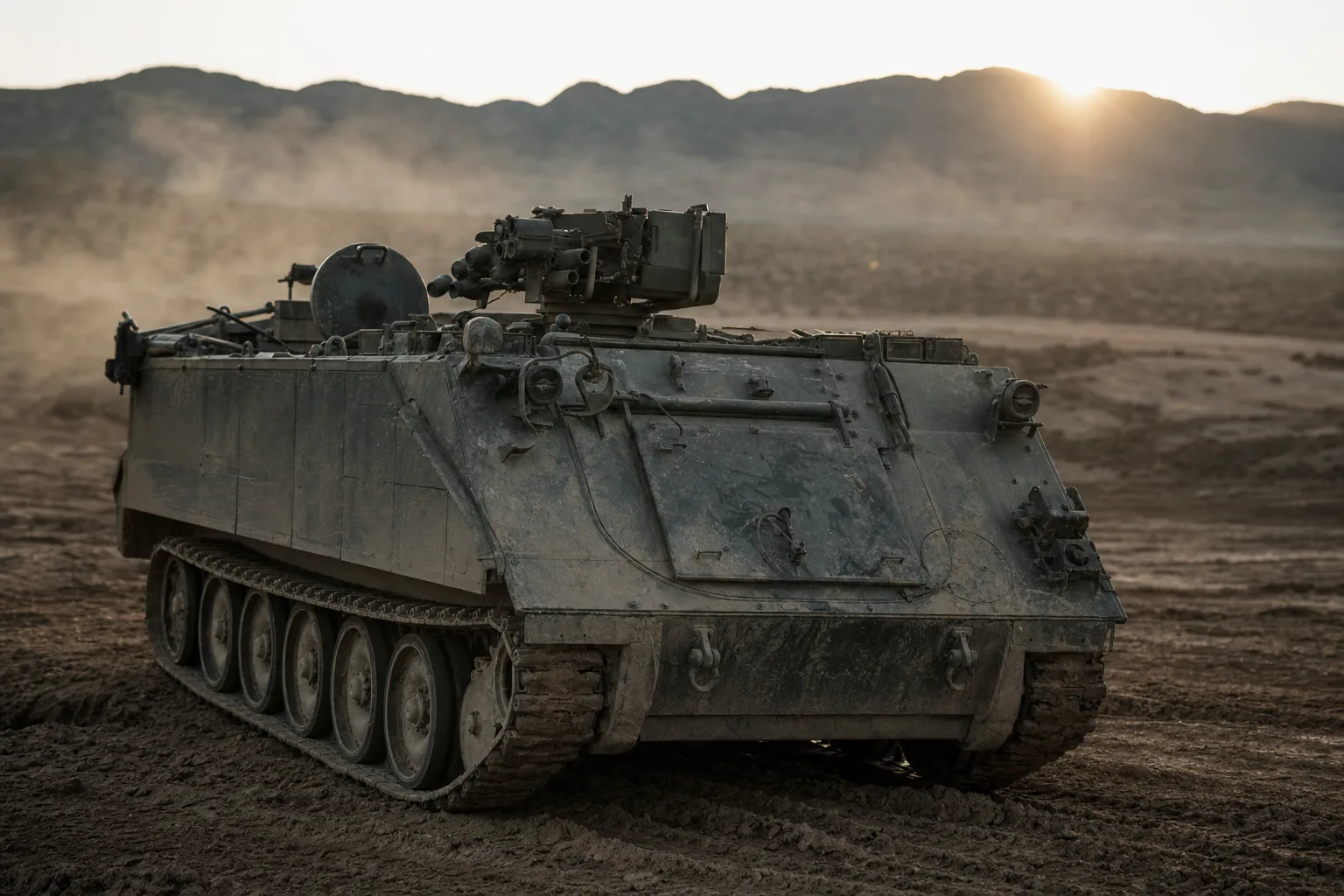
OPFOR
OPFOR: What the Opposing Force Is and Who Plays It
OPFOR is short for opposing force: the unit that represents the enemy so that a training exercise has one. The abbreviation is used the way a rank is used, as a name for a role rather than for a formation, and the same three letters cover a company acting the part for an afternoon and a regiment that has done nothing else for decades.
What it is for
An exercise without a thinking enemy tests a plan against itself. The opposing force exists to make the other side’s plan meet something that reacts, has its own objectives, and is not obliged to cooperate. At the low end this needs no special unit at all: one company plays the aggressor, gets its own mission, and the two sides find out what happens. The value rises sharply when the enemy is permanent, because a unit that fights the same ground every month develops an advantage no visiting force can rehearse against.
Who does it full time
The US Army runs three major training centres with a resident opposing force. At the National Training Center at Fort Irwin in California it is the 11th Armored Cavalry Regiment, the Blackhorse. At the Joint Readiness Training Center in Louisiana it is the 1st Battalion, 509th Parachute Infantry Regiment, the Geronimos. At the Joint Multinational Readiness Center at Hohenfels in Germany it is the 1st Battalion, 4th Infantry Regiment, the Warriors.
Each of these units trains to a doctrine that is not its own army’s, which is the harder half of the job. Equipment is modified to look like the opponent’s, formations are drilled to the opponent’s pattern, and the unit is expected to be good enough at it that a rotation which does badly has learned something real rather than met a caricature.
The enemy is always fictional
Naming a real state as the opponent of a scheduled exercise creates a diplomatic problem that the exercise does not need, so the scenario invents one with the military characteristics of the country actually being planned against. The Circle Trigonists were patterned on the Wehrmacht until 1978; the Krasnovians on the Soviet Red Army after it; Pineland is the country that Special Forces candidates operate in during their final assessment, and Aragon the island that rotations at the Joint Readiness Training Center invade.
The names change as the expected opponent does, which makes the roster of fictional enemies a reasonably honest record of what the army thought it was preparing for at the time.
Why the term travels beyond the training area
Because the role is defined by function rather than by formation, the abbreviation is portable in a way most military shorthand is not. A staff exercise with no troops in the field still has an OPFOR, played by a handful of officers working from the opponent’s doctrine; a cyber range has one; so does a unit rehearsing a raid against a mock-up of the objective. What all of them share is the same thing that makes the term useful: someone is required to want the other outcome, and to be competent at pursuing it.
That is also why the word appears in writing about the armed forces far more often than the number of dedicated units would suggest. Used loosely it means the adversary in any planning problem, and it carries a mild irony that a plainer word would not: calling something the opposing force concedes that the enemy in question is an invention of the exercise, however seriously everyone involved is about to take it.
What it is not
OPFOR is not the same as an aggressor squadron, although air forces use the two ideas for the same purpose. It is not an enemy order of battle, which is a document rather than a unit. And it is not a euphemism for a real adversary: the whole point of the fictional state is that the training audience can be told exactly who it is fighting, in detail no diplomatic relationship would survive if the name were real.
Questions and answers
Is OPFOR a real enemy or a role?
A role. At its simplest any unit can be the opposing force for one exercise, differing from the other side only in the objectives it is given. What makes the term worth having is the full-time version: units that do nothing else, study a doctrine that is not their own army's, and fight it well enough that the visiting unit loses convincingly.
Why does the enemy have an invented name?
Naming a real country as the likely opponent of a training exercise is a diplomatic problem, so the scenario uses a fictional state with the military characteristics of the expected one. The Krasnovians stood in for the Soviet Army at the National Training Center from 1978; Pineland is the country Special Forces candidates operate in during their final assessment.
Does OPFOR always win?
Often, and that is the design rather than a failure of the rotating unit. The opposing force fights on ground it lives on, against a plan it has seen variations of many times. A rotation that beat it easily would have taught the visiting unit very little.