Helicopters
The UH-60 Black Hawk: The Aircraft That Ends Up Doing Everything
The Black Hawk is the aircraft least likely to appear in a recruiting advertisement and the one an army would miss first. It carries no significant armament, has no specialised attack capability, and is the platform on which a very large share of what army aviation actually does depends.
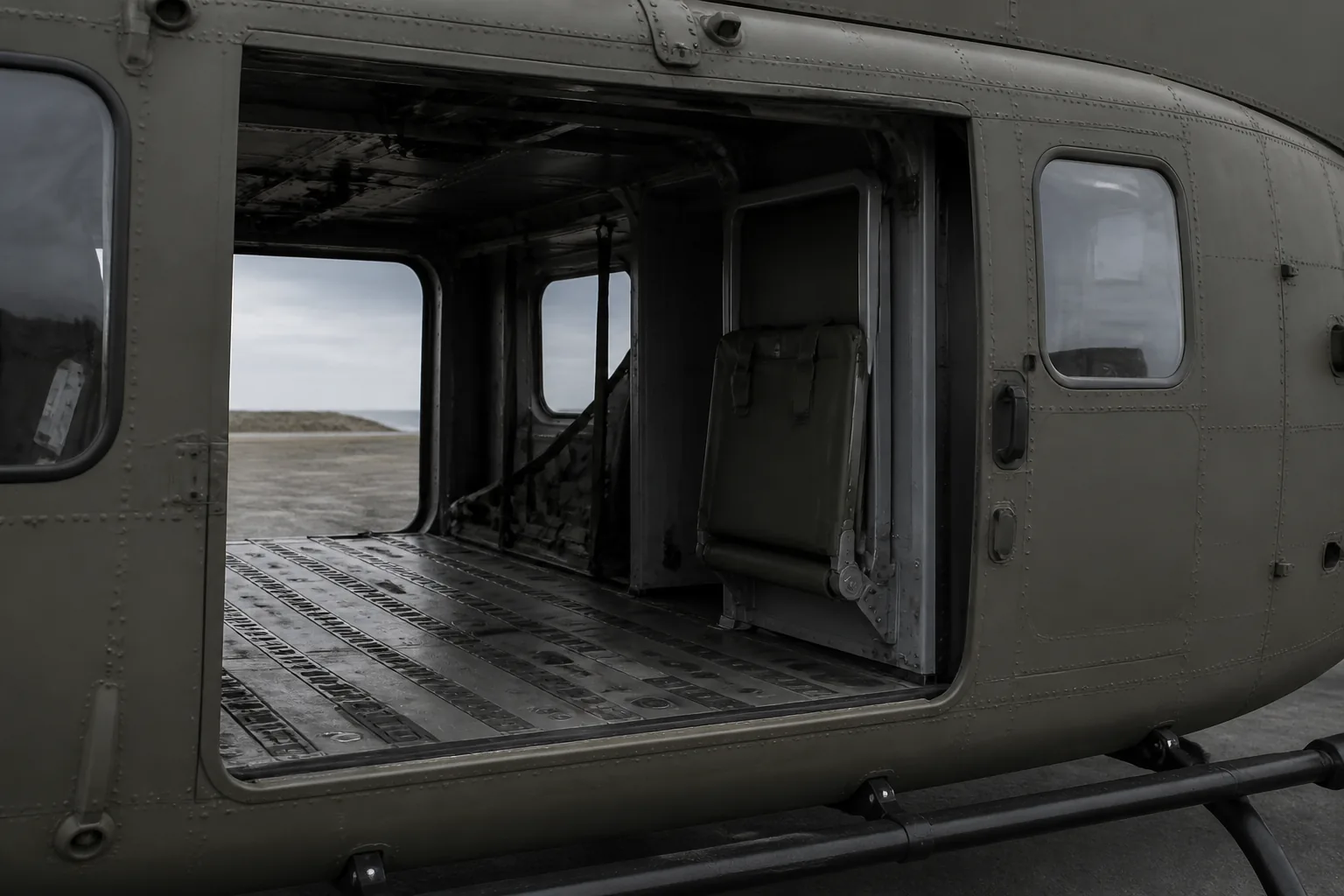
Utility means the cabin
Everything about the design serves the space behind the cockpit. A squad of infantry, a load of cargo, a sling load underneath, or several stretchers and the medical personnel to work on them.
Two pilots forward, crew chiefs at the doors operating the aircraft’s self-defence guns and managing the load, and a cabin. That is the aircraft.
The value of that arrangement is versatility rather than excellence. The same airframe conducts an air assault in the morning, resupplies a position at midday and evacuates a casualty in the evening. An army with a finite number of airframes gets more from one that can be retasked than from several that each do one thing.
The job that matters most
Medical evacuation is the role with the largest measurable effect of anything either attack or utility aviation does.
Survival from serious trauma depends heavily on time to surgical care, and a helicopter compresses that time from hours to tens of minutes in terrain where ground evacuation would be slow or impossible. The substantial improvement in casualty survival rates over recent decades has several causes: improved field medicine, better protective equipment, surgical teams positioned further forward, and rapid air evacuation is among the largest of them.
It is also the role that most constrains where a ground force can operate. A commander plans around whether casualties can be evacuated, and the answer to that question is usually an aviation availability question.
What the design protects against
Crash survivability rather than gunfire. Energy-absorbing structure, seats designed to attenuate impact loads, redundant flight and hydraulic systems, and a rotor and transmission built to keep turning after damage.
The reasoning is a realistic assessment of what happens to utility helicopters. The worst likely day is an accident, a hard landing or a single hit in a place that matters — not a sustained exchange of fire, which is the attack helicopter’s problem. Designing against the likely case as opposed to the dramatic one is why the airframe has the reputation it has.
Why the family keeps growing
A successful general-purpose airframe accumulates specialisations, and this one has accumulated a great many: dedicated medical evacuation versions with internal fittings and equipment, special operations versions with extended range and different avionics, electronic warfare and command variants, naval versions adapted for shipboard operation.
The common airframe is what makes that economical. Maintenance, training and spares are shared across a large fleet, which is the reason a forty-year-old design is still being built and still being adapted rather than replaced.
The worst likely day for a utility helicopter is not a sustained exchange of fire. It is an accident, a hard landing, or a single hit in a place that matters, which is why survivability work on this airframe has concentrated on crashworthiness and redundancy and not on armour.
A utility helicopter’s value is measured in how little it specialises. The same airframe moves troops, carries casualties, lifts loads underneath and does none of them as well as a purpose-built aircraft would, and that is the point: a fleet of one type can be maintained, crewed and repaired anywhere it operates. Specialisation is bought back afterwards, in equipment fitted for a mission and removed again after it. That is also why the type has stayed in production so long: the airframe did not need to be right for any one task, only adequate for all of them.
Questions and answers
What makes a utility helicopter valuable?
That it does several jobs adequately rather than one job perfectly. The same airframe moves infantry to a landing zone, resupplies a position no road reaches, carries a commander, lifts an external load and evacuates casualties. An army has finite airframes, and one that can be retasked between missions in an afternoon is worth more than several specialists.
Why is medical evacuation the most consequential role?
Because casualty survival depends heavily on time to surgical care, and a helicopter is what compresses that time from hours to tens of minutes. The improvement in survival rates across recent decades has several causes (better field medicine, better protective equipment, forward surgical teams), and rapid air evacuation is among the largest of them.
What does the airframe design prioritise?
Crash survivability and damage tolerance, not protection against fire. Energy-absorbing structure and seats, redundant systems, and a rotor and transmission designed to keep turning after damage. The reasoning is that a utility helicopter's worst realistic day is an accident or a single hit, not a sustained exchange of fire.
Why so many variants?
Because a general-purpose airframe attracts specialisation. Medical evacuation versions with internal stretcher fittings and medical equipment, special operations versions with additional range and different avionics, electronic warfare and command versions, and naval versions for shipboard operation. The common airframe is what makes the family economical to sustain.