Helicopters
The AH-64 Apache: An Aircraft Designed to Be Shot At
An attack helicopter is a strange design problem. It has to engage ground targets, which means operating within range of everything on the ground, at low altitude, slowly, in an aircraft that cannot armour itself the way a vehicle can. The Apache is the result of accepting that instead of designing around it.
Designed to be hit
The most distinctive thing about the aircraft is what it assumes. Crew stations are armoured. Flight controls and hydraulics are redundant. The structure is designed to keep flying with damage, and the landing gear and seats are designed to absorb a hard arrival.
None of that makes it invulnerable and it is not intended to. It is designed so that being hit is survivable often enough for the aircraft to be usable in the role.
The tandem seating follows from the same logic. There is no cabin, so the crew can be placed in line: which narrows the fuselage and reduces the target presented from the front. The rear seat flies, the front operates sensors and weapons, and both stations can do either, because losing one crew member should not lose the aircraft.
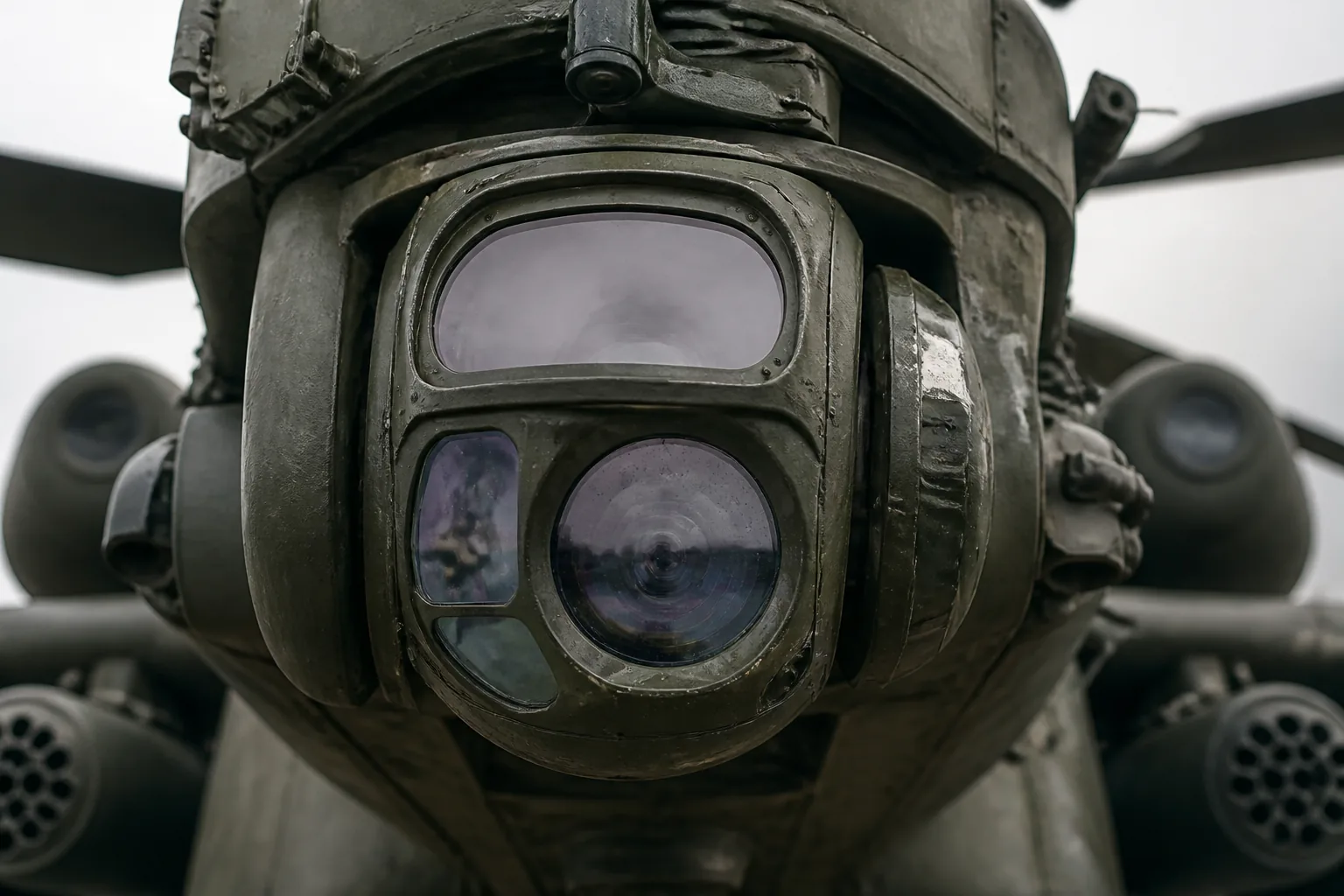
The sensor is the weapon
The gun and the missiles receive the attention. The capability is the sensor suite.
Finding, identifying and tracking targets at range, at night, and while the aircraft manoeuvres is the hard part of the job, and it is what distinguishes an attack helicopter from a helicopter with weapons on it. The optics, thermal imaging and targeting systems are the core of the airframe and not equipment fitted to it.
The variants that carry a sensor above the rotor mast add the tactically decisive capability: observing from behind terrain with only the sensor exposed. That is the mechanism by which an aircraft this vulnerable survives — it looks and shoots from positions where it is not itself visible.
How it is actually used
Not by charging defended positions, which is how the aircraft appears in popular depiction and how the costly lessons were learned.
Doctrine emphasises terrain masking, engaging from standoff where the weapons permit it, coordination with artillery and fixed-wing aircraft to suppress air defences, and working with the ground force rather than independently of it. Operations that committed helicopters into concentrated ground fire without suppression have produced significant losses, and those experiences shaped how the aircraft is employed.
Its place in the pair
The Apache exists alongside utility aviation instead of in competition with it. In an air assault the utility aircraft carry the force and the attack aircraft screen the route and the landing zone; in support of a ground unit in contact, the attack helicopter provides precise fire that artillery cannot deliver as close.
It is a specialised capability that is decisive when it is required, operating from an airframe that is expensive to buy, expensive to maintain and vulnerable by the nature of the mission. All three of those are the price of putting a precise, responsive weapon where a ground commander can talk to it directly.
The helicopter’s limits are set by the ground it works over rather than by the airframe. Altitude and heat cut the lift available, which is paid for in fuel, ammunition or both, and the crew makes that trade before take-off instead of in the air. This is why the same aircraft performs very differently between theatres, and why a capability described in a specification sheet is a ceiling rather than an expectation. Crews plan to the day’s conditions, not to the manual, and the difference between the two is where most of the professional judgement in the job sits.
Questions and answers
What makes an attack helicopter different from an armed one?
Three things, and a door gun is none of them. A targeting sensor suite as the core of the aircraft rather than an addition to it; armoured crew stations and redundant systems designed for an aircraft that expects to be hit; and weapons integrated into the fire control as opposed to bolted on. An armed utility helicopter has the weapons and none of the rest.
Why is the crew seated in tandem?
Because there is no cabin to seat them side by side, and because the arrangement narrows the fuselage and reduces the frontal area presented to ground fire. The rear station flies the aircraft and the front operates sensors and weapons, though both can do either: a redundancy that exists precisely because the aircraft is expected to take damage.
How vulnerable is it in practice?
Vulnerable, which is why it is used the way it is. Operations against defended positions have produced significant losses when aircraft were committed into concentrated ground fire without suppression, and doctrine reflects those lessons: terrain masking, standoff engagement where possible, and coordination with artillery and fixed-wing support and not attacking alone.
What is the mast-mounted sensor arrangement for?
Placing a radar or sensor above the rotor allows the aircraft to observe from behind terrain with only the sensor exposed, which is the tactical core of how attack helicopters survive. Not every variant carries one, and the capability is a large part of why the aircraft can engage from positions where it cannot itself be easily seen or hit.