MOS 12B
12B Combat Engineer: Mobility, Counter-Mobility and Survivability
Combat engineers exist to change the ground. Three missions cover nearly everything the specialty does: let friendly forces move, stop the enemy moving, and protect what needs protecting. A 12B is a soldier who fights as part of a manoeuvre formation and does that work under the same conditions as the infantry alongside them.
The three missions
Mobility. Breaching obstacles, clearing routes of emplaced devices, crossing gaps, improving roads and preparing landing and assembly areas. If a formation is going to move somewhere, engineers are the reason it can.
Counter-mobility. Emplacing obstacles, demolishing bridges and structures, and shaping the ground so that an enemy is channelled where friendly fire can reach them. This is the mirror of the first mission and uses much of the same knowledge.
Survivability. Digging fighting positions, hardening structures, building protection for command posts and equipment. Unglamorous, continuous, and the difference between a position that absorbs an attack and one that does not.
Breaching
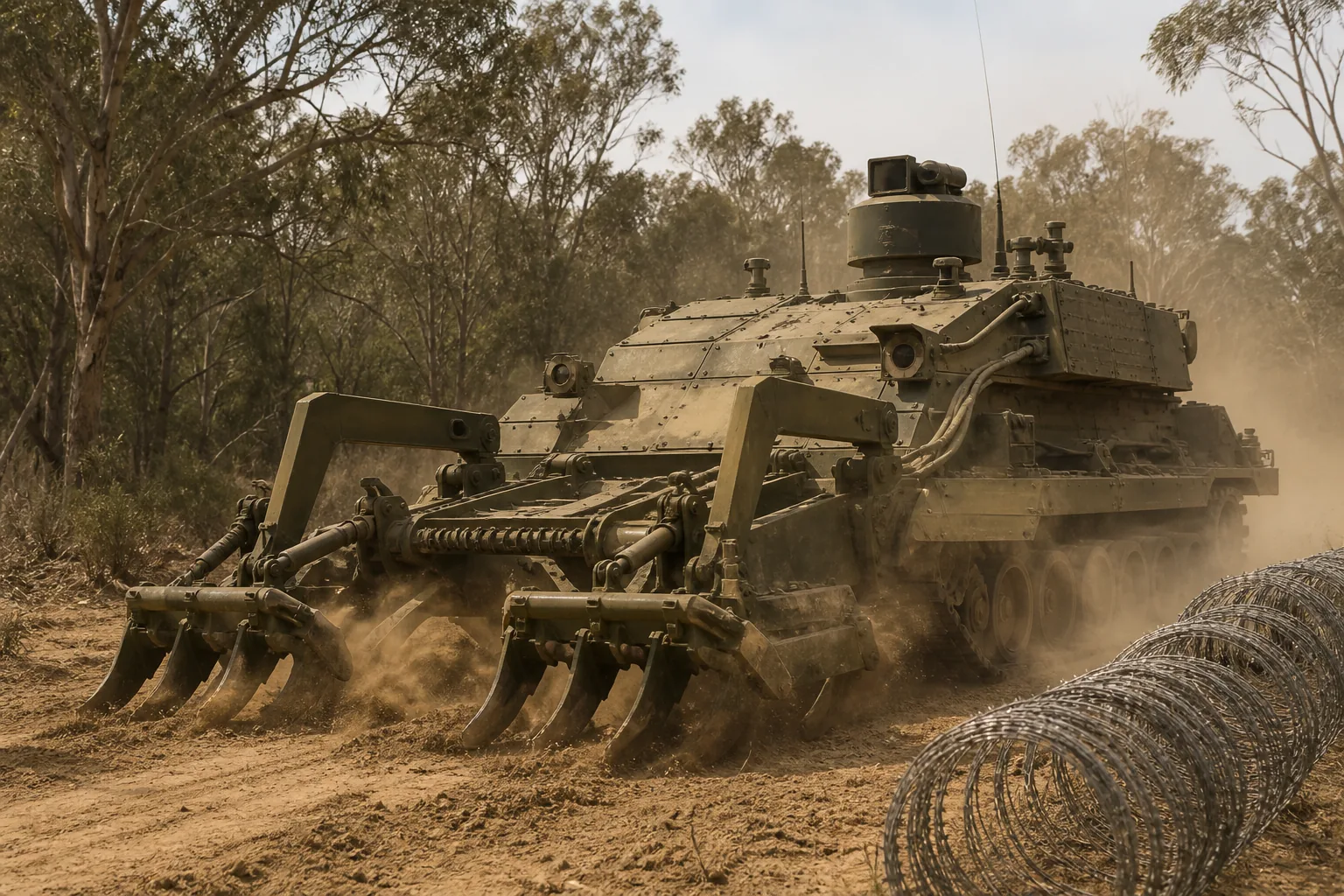
The task that defines the specialty and the most dangerous routine thing engineers do.
An obstacle worth breaching is covered by fire, because an uncovered obstacle only delays. The breach point is therefore precisely where the enemy is prepared, and creating one means working (sometimes dismounted, sometimes with specialised vehicles) at a known location under observation.
For that reason a breach is planned as a combined-arms operation with a specific vocabulary: suppress the covering fire, obscure the breach site, secure the near and far sides, reduce the obstacle, and assault through. Engineers reduce the obstacle; everything else in that list is somebody else’s job, and a breach attempted without them is how engineer units take casualties.
Route clearance
Two decades of operations in which the primary threat was emplaced explosive devices made route clearance a major engineer mission, with purpose-built vehicles and specific tactics for finding and avoiding or destroying devices along a road.
The skill set built in that period (pattern recognition on ground surface disturbance, systematic search, working with detection equipment and, increasingly, unmanned systems) is being retained even as emphasis shifts back to conventional breaching, because the threat has not gone away.
Training
One Station Unit Training in Missouri, combining basic combat training and engineer job training in a single course at one location. The course covers demolitions, obstacle construction and reduction, route clearance, construction basics and the infantry skills the role assumes.
Where the career goes
Through team and squad leadership to platoon sergeant, with the usual shift from doing the task to being responsible for people doing it safely — which in a specialty working with explosives and heavy plant is a heavier responsibility than the phrase suggests.
The engineer career field is broad, so lateral movement is genuinely available: horizontal construction, vertical construction, bridge crewman, plumbing and electrical specialties, and the technical engineer role. Explosive ordnance disposal is a separate specialty with its own selection and a long pipeline.
What it is worth afterwards
More than most combat arms specialties, and more concretely. Construction and heavy equipment operation are direct. Demolition and blasting work transfers with civilian licensing. Utility, infrastructure and public works crews recruit from it.
The most transferable thing is not a skill but a habit: working safely and by procedure around things that kill people when procedure is skipped.
The job’s two halves pull in opposite directions: building things that must last and destroying things that must not. Both are taught, and which one dominates a given assignment depends entirely on where the unit is sent.
Civilian work this leads to
- Construction trades and heavy equipment operation
- Demolition and blasting work, with licensing
- Utility and infrastructure crews
- Public works and municipal engineering support
Questions and answers
What are the three engineer missions?
Mobility: letting friendly forces move, by breaching obstacles, clearing routes and gap crossing. Counter-mobility (stopping enemy movement, with obstacles, demolition and mines. Survivability) protecting people and equipment with fighting positions and hardened structures. Almost everything a combat engineer does falls under one of the three.
Is a combat engineer a builder or a fighter?
Both, and the balance depends on the unit. Combat engineers are trained infantry-capable soldiers who fight as part of manoeuvre formations, and the engineer tasks are performed under the same conditions as everyone else's. Vertical and horizontal construction are separate specialties within the same career field.
What is a breach?
Creating a passage through an obstacle (a minefield, a wire obstacle, a wall, a ditch), so that a formation can pass. It is the most dangerous routine engineer task, because the obstacle is normally covered by fire and the breach point is exactly where the enemy expects you. It is planned as a combined-arms operation, not as an engineer task.
Do 12Bs handle explosive ordnance disposal?
No, that is a separate specialty. Combat engineers use demolitions to accomplish engineer tasks and are trained in route clearance and detecting emplaced devices, but rendering safe an unexploded item is EOD work with its own long pipeline.
What transfers to civilian work?
A great deal, more concretely than most combat arms specialties. Construction, heavy equipment operation, demolition and blasting with the right licensing, and utility and infrastructure work all recruit from it, and the safety discipline around explosives and heavy plant is directly relevant.