
Wars
The Gulf War: The Campaign That Validated a Doctrine Built for Europe
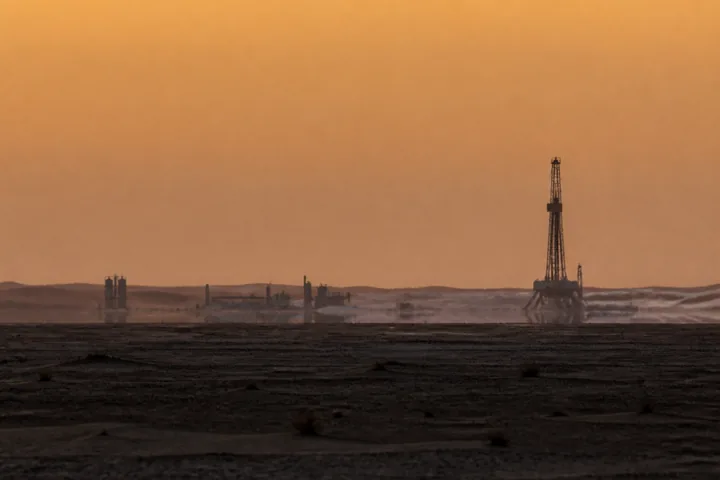
The Gulf War is the cleanest test in modern history of a doctrine against the enemy it was designed for: except that the enemy was in the wrong place. The American and allied force that deployed in 1990 had been built through the 1980s to fight outnumbered against Soviet armoured formations in central Europe. It was used instead against a large conventionally organised army in open desert, and the result was more one-sided than almost any pre-war assessment had predicted.
What the force had been built for
Through the 1970s and 1980s, doctrine had been rebuilt around a specific problem: a numerically inferior force defeating a numerically superior one by fighting the depth of its formation instead of its leading edge. Strike follow-on echelons before they arrive; disrupt command and supply; use superior sensors and precision to see and hit first; combine air and ground into one plan instead of two coordinated ones.
Supporting that doctrine was a training system rebuilt after Vietnam around large-scale realistic exercise against a dedicated opposing force, and a generation of equipment: the main battle tank, the infantry fighting vehicle, the attack helicopter, the air-superiority fighter, designed as a matched set.
None of it had been tested at scale.
Why the terrain mattered so much
Open, flat desert removed the two things that had frustrated firepower in Vietnam: cover and concealment. Thermal sights could identify and engage vehicles at ranges beyond return fire, particularly at night. Air reconnaissance could see deployed formations. Navigation, historically the hardest part of desert operations, had become a solved problem.
The opposing army, meanwhile, was deployed in fixed defensive positions with a centralised command system and long, exposed supply lines: the configuration the doctrine had been written against.
It is worth stating the qualification plainly: this outcome does not transfer. The same force in close terrain, in cities, or against an opponent who declined conventional deployment produced very different results in the following decades, on the same ground.
The two campaigns
The air campaign ran for weeks and was organised in overlapping phases: air defences and command systems first, then infrastructure and supply, then deployed ground formations. By its end the defending army had lost much of its ability to be commanded, resupplied or moved by day.
The ground campaign lasted about a hundred hours. Its shape was a wide flanking movement to the west through terrain assumed to be impassable for heavy forces, aimed at the depth of the defence rather than at its front, while a supporting effort fixed attention on the direct approach.
The hundred hours are what is remembered, and reading them as the whole war inverts the causation. The ground offensive was cheap because the air campaign had already been expensive for the other side.
What the war did and did not settle
It settled the doctrine argument decisively enough to shape a decade of force planning, and it established precision munitions, night operations and integrated air-ground command as the expected standard, not an aspiration.
It did not settle the political problem. The mandate covered the liberation of Kuwait and the coalition stopped at that limit, leaving in place the regime and the circumstances that produced a decade of containment operations and, eventually, a second war on the same ground with a very different character.
The most durable lesson is the one least often drawn. The campaign demonstrated what a conventionally organised opponent should never do (mass in the open against a force with better sensors and air superiority), and every subsequent adversary learned it. The dominance the Gulf War displayed is part of the reason the wars that followed it were not fought that way.
The air campaign lasted weeks and the ground campaign lasted days, a ratio that shaped expectations for the next decade.
Questions and answers
Why was the ground campaign so short?
Because the air campaign that preceded it had run for weeks against command systems, supply and deployed formations, so the army the ground offensive met had already lost cohesion, communications and much of its logistics. The hundred hours are the visible end of a campaign that had been degrading its opponent for over a month, not a hundred-hour war.
Did the war prove that air power alone could be decisive?
It was argued at the time and remains contested. Air power achieved more than most pre-war estimates predicted and did not by itself produce a withdrawal, which is the fact both sides of the argument have to accommodate. The defensible statement is narrower: against a large, conventionally deployed force in open terrain with a centralised command system, air power can degrade capability to the point where ground operations become comparatively cheap.
Why did the coalition stop at the border?
Because the mandate under which the coalition operated was the liberation of Kuwait, and continuing beyond that would have exceeded both the authorisation and the coalition's political agreement. The decision has been argued about ever since, and the arguments made for it at the time (coalition cohesion, occupation costs, regional balance) are the same arguments the following decade tested.
What did the war reveal about precision weapons?
That they worked, and that their share of the total was small. The great majority of munitions dropped were unguided; the guided ones accounted for a disproportionate share of the damage to high-value targets. The main consequence was procurement: the effectiveness demonstrated by a small fraction of the effort drove precision toward being the default instead of the exception.