
Commanders
Pershing and the AEF: Building a Modern Army From Almost Nothing
John Pershing’s reputation rests on a campaign that lasted about six months, and it should rest on the eighteen months that preceded it. When he was appointed to command the American Expeditionary Forces, the United States had a small regular army, no experience of deploying a modern force overseas, and none of the apparatus required to sustain one. The force that fought in 1918 had to be created, and creating it was the harder task.
What did not exist in 1917
A modern army in the field requires an enormous amount that is invisible in any account of the fighting.
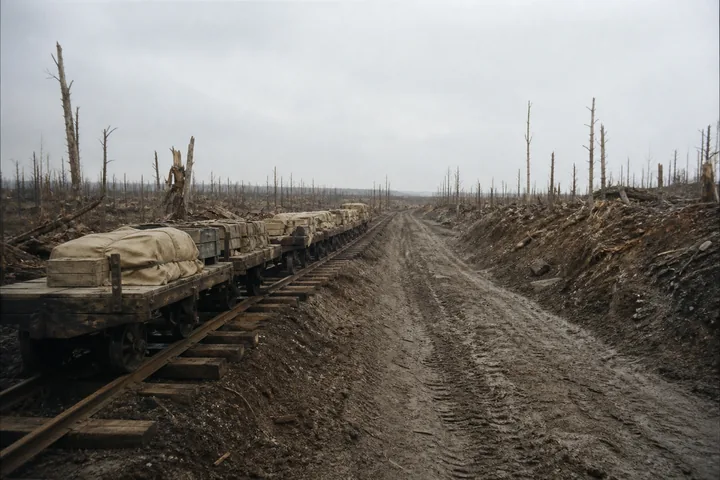
Ports on the receiving side capable of handling the tonnage. Railways from those ports to the front, with the rolling stock and the operating staff to run them. Depots, ammunition dumps, remount services, workshops. Hospitals and a casualty evacuation chain. Training areas and schools in theatre for troops arriving without the skills. Staff officers in the numbers a force of that size consumes, when the entire pre-war army had produced a few hundred.
Very little of this existed. The AEF built ports, laid railway, established depots and schools, and ran a shipping programme across an ocean where submarines were sinking merchant vessels faster than they were being replaced for part of the period.
That is the achievement, and it is measured in throughput, not in ground taken.
The amalgamation argument
The most persistent dispute of his command was whether American troops should be fed into existing Allied divisions or formed into a separate American army.
The Allies wanted the former, urgently and with reason: trained manpower was needed immediately, and building new formations from scratch takes a year. He resisted, conceding temporarily under the pressure of the German offensives of spring 1918 while never abandoning the principle.
His military argument was that units committed piecemeal would be consumed as replacements and would never develop into formations capable of independent operations, and that the officers required for a national army would never be trained if they never held command. His political argument, which was not his to make but was the government’s position, was that a national army was the basis for a national voice in the peace settlement.
Both arguments have force, and so does the Allied one. The dispute is a permanent feature of coalition warfare, not an episode.
Where the doctrine was wrong
He believed the European armies had become excessively dependent on artillery and trench methods, and that open warfare conducted by well-trained infantry with rifles could restore movement. Training emphasised marksmanship and open-order attack accordingly.
The judgement that the deadlock would be broken by a return to movement was correct. The mechanism was wrong: movement returned in 1918 through the integration of accurate predicted artillery fire, small-team infantry tactics, aircraft and tanks — not through rifle fire.
Early American attacks were costly as a result, and the force adapted quickly, which is the more interesting fact. The doctrine written before contact was corrected by contact, and the speed of the correction is a reasonable measure of the training system he had built.
The inheritance
The staff structure, the divisional organisation and much of the officer-education system that the interwar army rested on came out of the AEF. So did its leadership: a very large share of the senior American commanders of the next war had served in the force he raised, which is the most concrete inheritance any commander leaves.
The institutional legacy outlasted the campaign. An army that had been a frontier constabulary a generation earlier ended the war able to plan, move and supply formations of a size it had never handled, and the officers who ran that machinery were the ones who commanded in the next war. The staff system outlived the units it was built for.
Questions and answers
Why did he insist on a separate American army and not feeding troops into Allied formations?
For a mixture of military and political reasons that are usually presented as one. Militarily he judged that units committed piecemeal under other commanders would be used as replacements and would never develop as formations. Politically, a national army was the basis for a national voice in the settlement. The Allies pressed hard for amalgamation, particularly during the crises of 1918, and he conceded temporarily in emergencies while never abandoning the principle.
Was his tactical doctrine sound?
Partly, and the criticism of it is largely justified. He placed heavy emphasis on rifle marksmanship and open-order attack, believing the European armies had become too dependent on artillery and trench methods. Early American attacks suffered accordingly, and the force adapted rapidly under fire. The judgement that the deadlock would eventually be broken by movement was right; the belief that it could be broken by infantry and rifles was not.
What was his most significant achievement?
Organisational. The United States entered the war with a small regular army and no capacity to deploy a modern force overseas, and within eighteen months had raised, trained, shipped and supplied millions of men across an ocean with the ports, railways, depots and hospitals to sustain them. Almost none of that infrastructure existed when he was appointed.
What did he leave behind institutionally?
The staff system, the divisional structure and much of the officer-education apparatus that the interwar army was built on, and (through the officers who served under him) the leadership cadre of the next war. A large proportion of the senior American commanders of 1941 to 1945 had served in the force he built.