Military guide
How Army Basic Training Works: Reception, Phases and Graduation Day
Army basic training runs about ten weeks in three named phases, preceded by a reception period that is not training at all and that most recruits remember more vividly than anything else. The structure is deliberate and the same in every battalion, which means the army basic training phases can be described accurately in advance, including what each one is actually for.
Reception: the week nobody warns you about
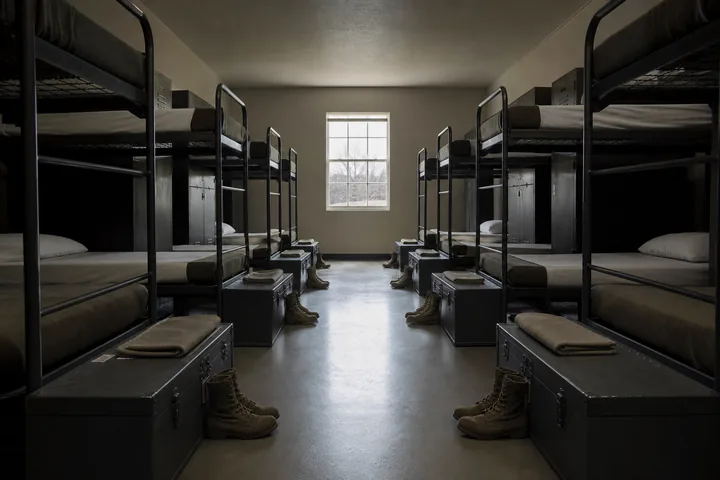
Before training starts there is a processing period of roughly a week: paperwork, medical screening and immunisations, equipment issue, haircuts, and a great deal of waiting in lines.
It is consistently described as the most disorienting part of the whole experience, and the reason is structural and not intentional. Nothing is being taught, nothing is explained, the schedule is opaque, and there is no unit yet. Training, when it starts, has a shape, which most people find easier than reception, not harder.
Red phase: control
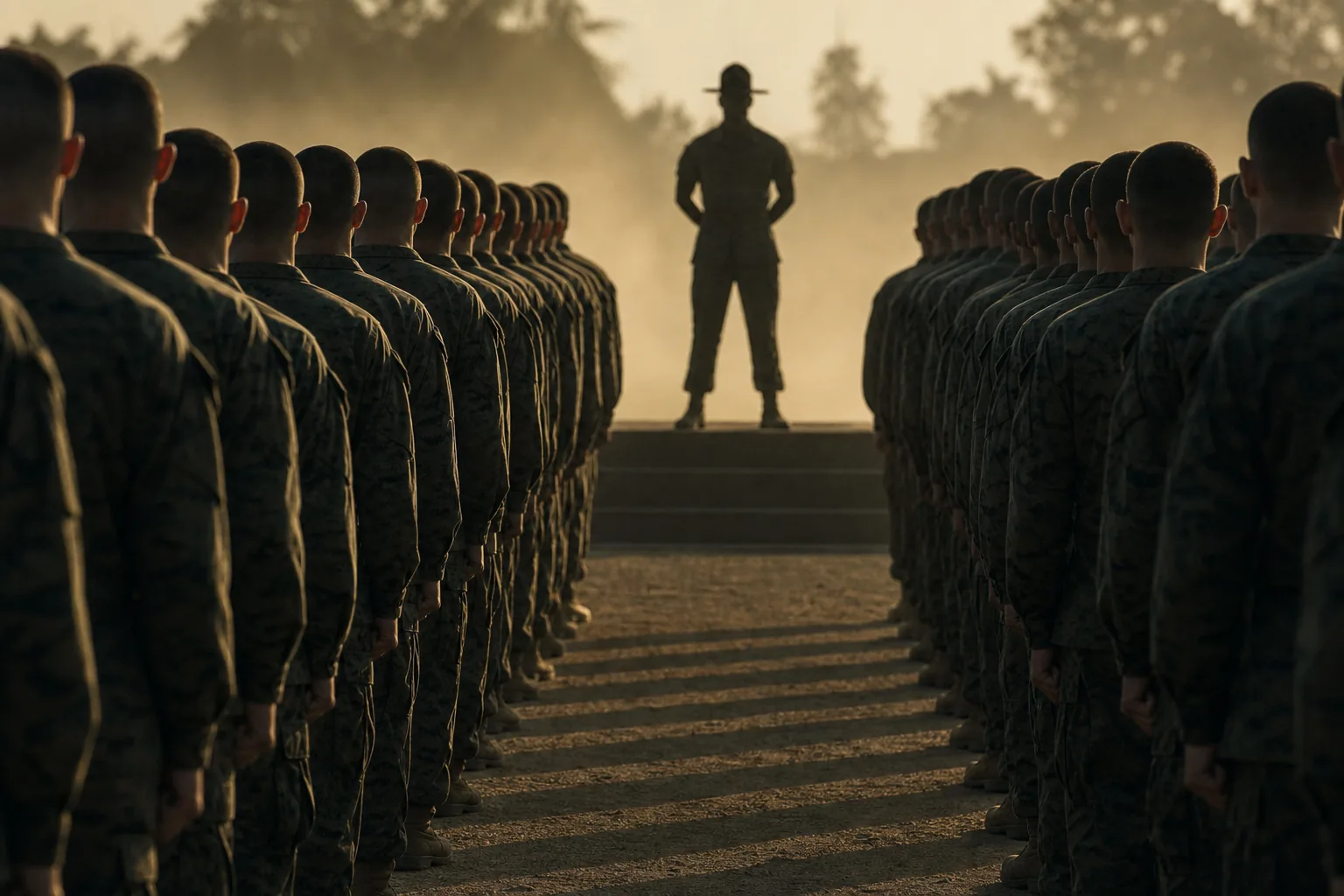
The first phase strips out individual autonomy. Drill and ceremony, physical training, uniform and barracks standards, Army values instruction, first aid, and the beginning of the discipline the rest depends on. Instructor intensity is highest here and it is deliberate: the objective is to replace individual decision-making with group response, quickly.
Initial fitness testing happens in this phase, and recruits who arrive unable to meet the standard spend the phase in remedial physical training on top of everything else, which is the practical argument for arriving fit.
White phase: the weapon
Marksmanship. Weapon handling and safety, disassembly and maintenance, zeroing, and then progressively harder qualification. Grenades and other individual weapons are introduced.
Weapon qualification is a graded requirement and it is the phase’s central event. It is also where recruits most often discover that the skill is teachable: a substantial proportion arrive having never fired a rifle and qualify without difficulty, because the instruction is methodical.
Blue phase: the field
Tactical training: movement, patrolling, land navigation, working as a team, and a series of field exercises culminating in an extended one that combines everything. Instructor style shifts noticeably here, from control toward coaching, because the objective has changed from compliance to competence.
The final fitness test and the remaining graded requirements fall in this phase.
What actually ends someone’s army basic training
Not fitness, in most cases. In rough order of frequency:
Injury. Stress fractures, knee and ankle injuries, and overuse conditions that will not heal inside the training timeline. This is the largest single cause and it correlates directly with arriving unconditioned.
Undisclosed medical history surfacing. A condition that was not declared at processing and becomes apparent under load. This ends training and is much worse than having declared it.
Failure to meet a standard after retraining. Recruits get remediation and additional attempts; persistent failure eventually ends the course.
Conduct. Less common, and handled administratively.
Graduation, then job training
Basic training graduation is a formal ceremony, families attend, and it is followed by advanced individual training for the contracted job field: a separate course at a separate post, of a length that varies enormously by specialty from a few weeks to the better part of a year. Almost nobody leaves the army basic training phases and goes straight to a unit.
Infantry, armour and combat engineers do not follow this pattern. They attend One Station Unit Training, in which basic and job training are one continuous course at one location with the same cadre throughout.
The honest preparation advice
Be able to meet the fitness standard on arrival. Everything between reception and basic training graduation is easier from that starting point, and the injury risk that ends most training failures drops.
Settle your administrative life first — pay, debts, dependents, storage, vehicle. Recruits distracted by an unresolved problem at home consistently report it as the hardest part, and it is entirely avoidable.
Expect the schedule to be the discipline rather than the content. Almost nothing taught in the three phases is intellectually hard; what is hard is doing ordinary things correctly at a set time, in a set order, with no slack and while tired. Recruits who arrive expecting a test of strength tend to struggle with that, and recruits who treat it as a sequence of small requirements to be met on time generally do not.
Bring the documents, not the equipment. Everything issuable is issued, and most personal kit is taken and stored on arrival; identification, banking and enlistment paperwork are the items whose absence actually creates work for you and for the cadre. The packing list a recruiter provides is the one to follow, because it is written against the current standard rather than against a forum post from several years ago.
Tell the truth at the medical screening, including about a condition that was treated and resolved. A disclosed history is an administrative question and usually a waiver question; an undisclosed one found later is a separation question, and that asymmetry is the single most consequential thing a recruit controls after fitness.
Finally, plan for the length of what follows rather than for the length of basic. Job training runs from a few weeks to most of a year, and the first duty station is decided by the needs of the service at the point the course finishes. Treating graduation as the finish line is the most common way people are surprised by their own first year.
Questions and answers
How long is basic training?
Around ten weeks for the standalone course, plus a reception period of roughly a week before it starts that recruits usually count and the Army does not. Infantry, armour and combat engineers instead attend One Station Unit Training, which combines basic and job training into a single longer course at one location.
What actually gets people sent home?
Rarely fitness. Far more often: an undisclosed medical condition that surfaces, an injury that will not heal inside the training timeline, a failure to meet a required standard after retraining, or a conduct issue. Injury is the largest single cause, which is why arriving already conditioned matters so much.
Is the first week as bad as people say?
The reception period is mostly waiting, paperwork, medical processing and equipment issue, and it is widely described as the most disorienting part precisely because it is not training and nothing is explained. Training itself has structure, which most recruits find easier.
Do drill sergeants really behave like that?
The intensity is real and it is deliberate: the first phase is designed to remove individual autonomy and rebuild it around the group. It is also regulated: what instructors may and may not do is governed by policy, and violations are treated seriously. The tempo drops noticeably by the third phase.
What should I do before I ship?
Run, do push-ups and sit-ups, and be able to meet the fitness standard on arrival. Also handle your paperwork, your finances and your family arrangements beforehand, administrative loose ends left at home are a genuine distraction that recruits consistently underestimate.