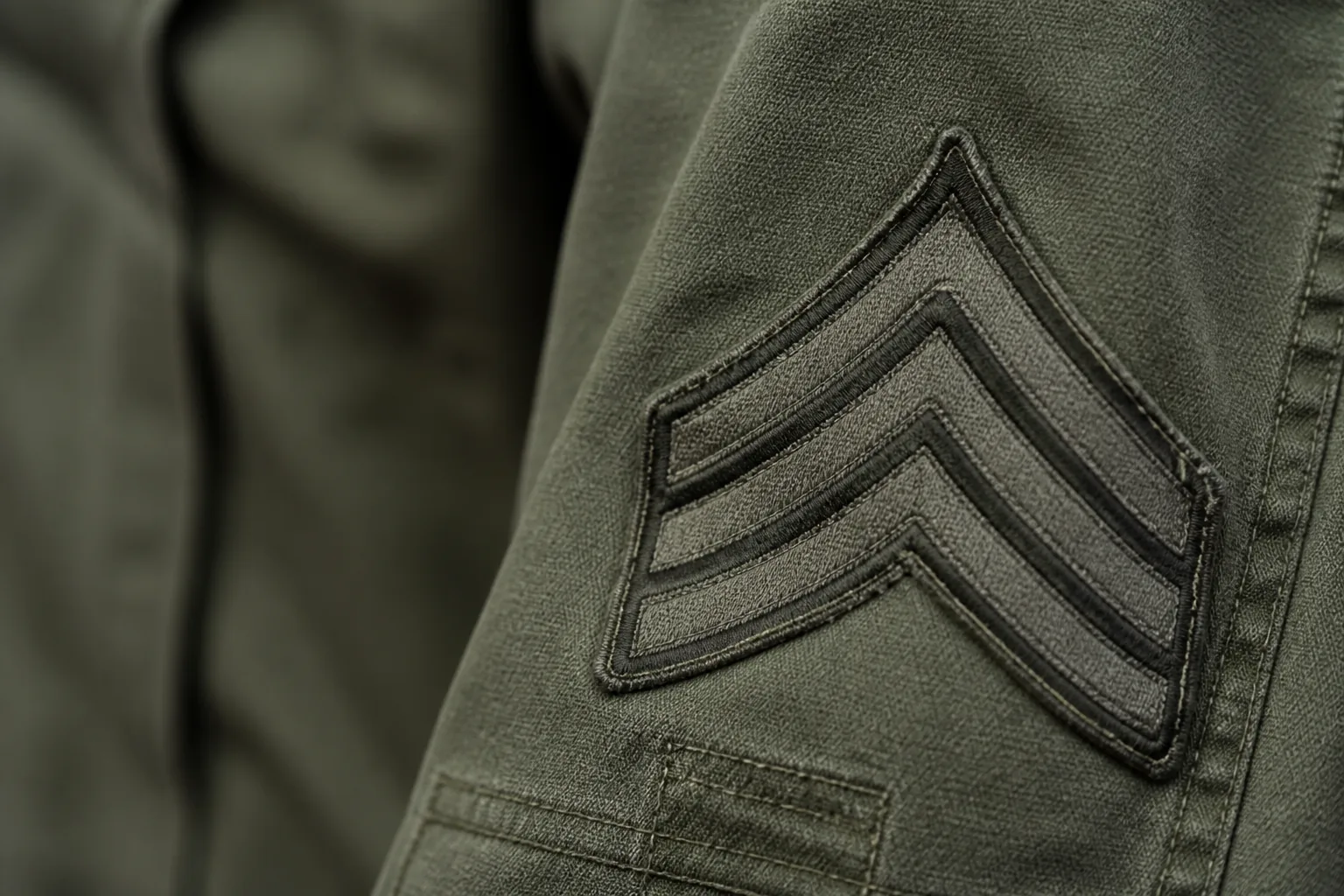
NCO
NCO: What a Noncommissioned Officer Actually Does

A noncommissioned officer is an enlisted leader. In the Army the NCO ranks begin at corporal and sergeant and run up through staff sergeant, sergeant first class, master sergeant, first sergeant and sergeant major.
What they actually do: run units day to day, enforce standards, train soldiers, and take responsibility for the people in their charge. The routine leadership of the military happens here, not at officer level.
The channel, not a second chain
NCOs form the NCO support channel, which runs parallel to the chain of command: team leader, squad leader, platoon sergeant, first sergeant, command sergeant major.
It is not a second chain of command and has no independent authority to issue orders the chain has not authorised. What it owns is execution, standards, training and soldier welfare, which is most of what happens in a unit on most days.
Example. A platoon has a lieutenant and a platoon sergeant. The lieutenant commands and is accountable for what the platoon does. The platoon sergeant, typically with ten or more years of service, runs it. A new lieutenant who understands that arrives asking questions; one who does not is the subject of a large body of cautionary institutional folklore.
The E-4 confusion
At pay grade E-4 the Army has both specialist and corporal. Same grade, same pay — and only corporal carries NCO status and authority. The distinction exists so that soldiers in leadership positions at that grade hold the corresponding authority, and it catches outsiders out routinely.
Why the distinction from officers matters
An officer’s authority comes from a commission. An NCO’s comes from appointment and from the chain of command. Formally, the most junior lieutenant is senior to the most senior sergeant major.
Practically, authority and expertise sit in different places by design, and the pairing of a commander with a senior NCO at every level is the arrangement the institution actually runs on.
Junior and senior
The category is not flat. E-5 and E-6 are the junior tiers, where the job is direct leadership of a small team and the technical mastery of a specialty. E-7 through E-9 are the senior tiers, where the work shifts toward running training, advising commanders and managing the careers of the people below. An E-9 in a unit senior enlisted position is doing something structurally different from a newly promoted sergeant, and treating the two as one category obscures the most important distinction in the enlisted force.
The NCO support channel
Alongside the chain of command, which runs through commissioned officers, there is a parallel channel running through senior enlisted leaders. It does not issue orders in competition with the chain of command. It carries standards, training and the enforcement of both, and it is how a commander’s intent reaches the individual soldier in practice.
The arrangement is deliberate. It gives the commander an independent read on the state of the unit, and it gives soldiers a route for problems that does not require going through their own officer first.
Professional education as a gate
Advancement through the NCO tiers is gated on formal schooling, not only on performance. Each service runs a sequence of courses tied to grade, and completing the course for the next tier is a prerequisite instead of a bonus. The evaluation system runs in parallel: an annual report on performance and potential that accumulates into the record a promotion board reads.
The consequence is that an outstanding sergeant who does not complete the required course does not advance, and this is the most common reason a strong performer stalls.
Warrant officers, which are not the same thing
Warrant officers are a separate track for technical specialists who stay in one field instead of moving into general leadership. They outrank all enlisted grades and are commonly former NCOs, but they are not NCOs. The distinction is the point of the track: it exists so that deep expertise does not have to be abandoned in order to be promoted.
Questions and answers
Why noncommissioned?
Because the authority comes from the appointment instead of from a commission granted by the President. A commissioned officer holds a commission; an NCO holds a warrant of appointment and derives authority through the chain of command. The distinction is legal and historical as opposed to a comment on responsibility.
Is a corporal an NCO?
In the Army, yes: corporal is the junior NCO grade at E-4, distinct from specialist which is the same grade without NCO status. That distinction confuses people constantly, because the two share a pay grade and only one carries NCO authority.