
Infantry vs Armor
Infantry vs Armor: Two Ways to Spend a Career
Infantry and armor are both combat arms, they fight alongside each other constantly, and they are different jobs to a degree that surprises people choosing between them. The distinction is not about how much action either sees. It is about what you spend your days doing and what your body is doing while you do it.
The load, and the machine
Infantry carries what it needs. Weapon, ammunition, water, protective equipment, radio, batteries, rations, and whatever the mission adds. The weight is the defining condition of the job: it determines how far you can go, how fast, and what state you are in when you arrive. Everything about infantry training is ultimately about operating under that load.
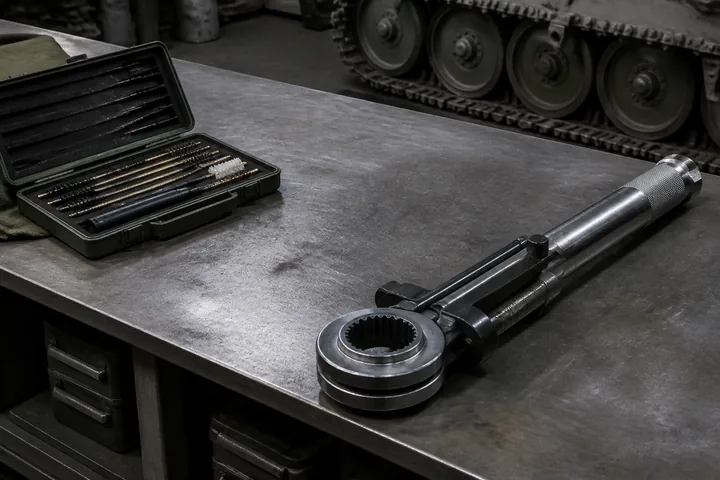
Armor crews do not carry anything comparable, and they maintain a machine that weighs sixty tonnes. Track links, road wheels, tension, filters, fluids, optics, weapon systems: a tracked vehicle of that mass generates maintenance work continuously, and a crew that falls behind on it has a vehicle that will not move when it is needed.
That is the honest headline for anyone choosing armor: most of the job is maintenance. Gunnery is the part that appears in recruiting material and a small fraction of the hours.
Terrain decides which arm matters
Open country favours armor heavily. Long fields of fire, thermal sights, protection and a large gun mean an armoured formation can dominate ground that infantry would cross slowly and expensively.
Close country: cities, forest, mountain, anything built or steep, inverts it. A tank in a street has restricted visibility, cannot elevate its gun far enough for upper floors, and is vulnerable to weapons carried by one person at short range. Infantry has to be there, and armor supports it with direct fire rather than leading.
Neither arm operates alone in either case, which is the point. Armor without infantry in close terrain is a set of targets; infantry without armor in the open lacks the firepower and protection to advance. The combined-arms relationship is not doctrine for its own sake.
What the two do to a body
Infantry injuries are cumulative and load-related: knees, back, hips, ankles, feet. They accumulate over years and they are the reason a great many infantry careers end on medical grounds instead of by choice.
Armor injuries cluster differently: hearing, from operating inside a vehicle with a large gun; back and hand injuries from maintenance, lifting track components and working in confined spaces.
Both are real and neither is the trivial option. They simply arrive by different routes.
What each is worth afterwards
Armor transfers more directly. Heavy equipment maintenance, diesel and turbine systems, hydraulics and tracked vehicle experience have civilian equivalents, and employers recognise them without translation.
Infantry transfers through leadership, clearance, reliability under pressure and a demonstrated record. That is genuinely valuable (law enforcement, emergency services, security and federal agencies read it correctly), and it requires the veteran to make the case, because the technical skill has no civilian counterpart.
Neither answer is a recommendation. The honest summary is that one job is carried and the other is maintained, and the choice is about which of those two costs suits the person making it.
Side by side
| Criterion | Infantry | Armor |
|---|---|---|
| What you fight from | On foot, carrying weapons, ammunition, water and equipment | Inside a tank, as one of a four-person crew with defined stations |
| Where you can go | Anywhere a person can walk: cities, forest, mountain, tunnel | Where the vehicle can go, which excludes a great deal of terrain |
| Daily work in garrison | Physical training, marksmanship, field exercises, drills | Track and hull maintenance, more of it than anything else |
| Physical demand | Very high and sustained; the load is the defining feature | High but different: lifting, confined spaces, maintenance work |
| Crew relationship | Squad of nine or so; you work as a team on foot | Crew of four in a confined space, interdependent to an unusual degree |
| Urban and close terrain | The primary arm; nothing substitutes for it | Supports infantry with direct fire; cannot operate alone |
| Injury pattern | Cumulative load injuries: knees, back, hips, feet | Hearing, back and hand injuries from maintenance and confined work |
| Civilian transfer | Leadership, clearance and reliability; the skill itself does not transfer | Heavy equipment maintenance and diesel systems experience transfers directly |
Questions and answers
Which is more dangerous?
It depends entirely on the conflict, which is why the question rarely has a useful answer in advance. In open terrain against an armoured opponent, being inside a tank is far safer than being outside one. In a city, against anti-armour weapons, a tank is a large target with restricted visibility and infantry has to be there anyway. The two arms exist because neither is survivable alone.
How much of armor work is actually maintenance?
Most of it, in garrison and in the field. A tracked vehicle of that weight consumes maintenance hours continuously (track tension and links, road wheels, filters, fluids, weapon systems, optics), and a crew that skips it is a crew that becomes non-operational. Anyone choosing armor for gunnery should understand the ratio before signing.
Can you move between the two?
Through reclassification, yes, and it is not routine. They are separate specialties with separate schools, and a move is an administrative process driven by the needs of both fields instead of by preference. Practically, most people who enter one of the two stay in it.
Which has better promotion prospects?
Broadly comparable, and both are large fields with predictable structures. The relevant difference is at the top: senior armor roles concentrate around a smaller number of formations, while infantry positions exist in almost every kind of unit including light, airborne and air assault formations, which gives slightly wider assignment variety.