
Military history
The 2007 Chinese Anti-Satellite Test, And the Debris Still in Orbit
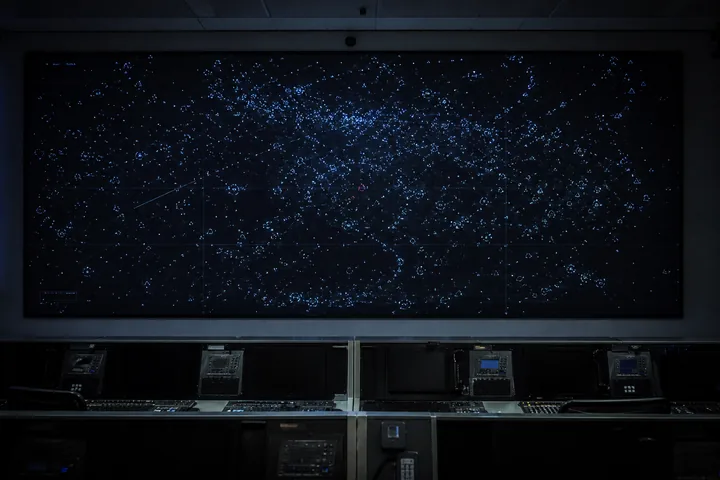
In January 2007 China destroyed one of its own weather satellites with a ground-launched missile, striking it in low Earth orbit at around 800 kilometres altitude. The test demonstrated a capability that was neither new in principle nor previously demonstrated at that altitude by China, and its most durable consequence was not military but physical: a large field of debris that is still being tracked.
The capability was not the surprise
Direct-ascent anti-satellite weapons were tested by both the United States and the Soviet Union during the Cold War. The United States conducted a well-known demonstration in 1985, destroying a satellite with a missile launched from a fighter aircraft. The physics is not exotic: a satellite in low orbit follows a predictable path and a missile with adequate guidance can be put in front of it, with the closing speed doing the work.
What the 2007 test established was that China possessed a working system, had the tracking and guidance to use it, and was prepared to demonstrate that publicly. For planners the relevant change was not “this is possible” but “this state can do it now”.
Why the debris mattered more than the demonstration
The intercept occurred at an altitude where orbital decay is slow. Fragments at 800 kilometres take years to decades to re-enter, and a high-velocity collision produces thousands of trackable pieces plus a far larger number too small to track and entirely capable of destroying a spacecraft.
The event became, by a wide margin, the largest single contribution to tracked orbital debris at that time. It affected a band of orbit heavily used by Earth-observation and weather satellites, including Chinese ones. Debris does not distinguish between flags.
One consequence has been operational and continuous: satellites in that region perform avoidance manoeuvres against fragments from this event, each manoeuvre costing propellant that shortens the spacecraft’s usable life.
The strategic argument it opened
The test crystallised a debate that has run ever since.
The dependency argument. American military capability relies on orbital systems for communications, navigation and timing, missile warning and imagery. An adversary able to destroy satellites attacks the connective tissue of the entire force rather than any single unit, which makes counter-space capability attractive out of proportion to the number of weapons involved.
The self-harm argument. Any state with valuable satellites has a strong reason not to create debris in orbits it uses. Kinetic destruction is indiscriminate over time and cannot be recalled. That is why subsequent thinking has moved toward reversible effects (jamming a link, dazzling a sensor, attacking ground stations or networks), which stop when the interference stops and leave nothing behind.
The demonstration problem. Reversible capabilities are harder to demonstrate credibly, and deterrence depends partly on the other side believing you can do it. That tension has not been resolved.
What followed institutionally
A subsequent American intercept of a failing satellite in 2008 was conducted at much lower altitude, where debris re-enters quickly: a deliberate contrast that was noted at the time. Space domain awareness, meaning the tracking and characterisation of objects in orbit, has grown into a distinct mission area since. The establishment of the Space Force in 2019 is part of the same trajectory: a mission set important enough, and distinct enough, to be organised on its own.
Reading the test twenty years on
The most instructive part is the asymmetry between the message and the residue. The demonstration communicated something for a news cycle. The debris is a permanent physical change to a shared environment, imposing costs on every operator including the one that created it, and it is the reason the same class of test is now widely treated as unacceptable instead of merely provocative.
How orbital debris actually behaves
Two properties make debris a different kind of problem from other military side effects.
It persists on a timescale set by altitude. Below roughly 400 kilometres the residual atmosphere drags fragments down within a few years. At 800 kilometres, where this intercept occurred, the same process takes decades to centuries. The altitude of an event, not its size, determines how long its consequences last.
It is dangerous out of proportion to its mass. Objects in low orbit move at several kilometres per second, and closing speeds between objects on different paths are higher still. At those velocities a fragment of a few centimetres carries the energy to destroy a spacecraft, and fragments that small cannot be reliably tracked, so they cannot be avoided, only survived or not.
The compounding risk is that each collision produces further fragments capable of causing further collisions. That runaway scenario is why debris is treated as a shared-environment problem, not as one operator’s mess, and why deliberately creating a large field of it at high altitude is now regarded as a distinct category of act.
What replaced kinetic testing
The direction of travel since has been toward capabilities that achieve a similar effect without the residue: jamming uplinks and downlinks, dazzling optical sensors, cyber operations against ground segments, and close-approach operations that inspect or interfere without destroying. All are reversible, none leaves debris, and all are considerably harder to attribute — which is a mixed advantage, since deterrence depends on the other side knowing who did what.
Questions and answers
Why is the debris the lasting consequence rather than the intercept?
Because an intercept at that altitude produces thousands of fragments in orbits that decay very slowly, and each one is a hazard to every satellite crossing that band for decades. The capability demonstrated was not new in principle; the debris field it created is a permanent physical change to a shared environment.
Was the capability itself a surprise?
Not in principle, anti-satellite weapons had been developed and tested by others decades earlier. What the test established was that this capability now existed at that altitude in another arsenal, which changes planning assumptions about whether satellites in that band can be relied on in a conflict.
What did it change in how space is treated militarily?
It moved space from a domain assumed to be a sanctuary to one treated as contested, with the practical consequences that follow: dispersal across more and smaller satellites, redundancy, and the assumption that a capability dependent on a single satellite is a capability with a single point of failure.